|
|
Manchester
Buildings in the Northwest of England
 

Papillon
Graphics' Virtual Encyclopaedia of Greater Manchester
Including
Bolton, Bury, Manchester, Oldham, Rochdale, Salford, Stockport, Tameside,
Trafford & Wigan |
|
NAVIGATION









































Virtual
Hosting by

TheServerBank
Photos
by John Moss
|
 |
 |
Manchester's
Great Buildings
The Architectural Heritage of Manchester
|
|
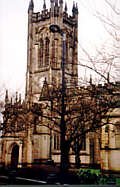
Manchester Cathedral

Minshull Street
Police Station

Shambles Square

Portico Library,
Mosley Street
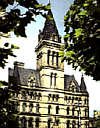
Manchester Town
Hall

Urbis - Museum
of the
Modern City

|
Manchester
Buildings
Manchester can trace its origins way back to Roman times, and
the city has many fine buildings from all periods of history and
architecture. In many ways, Manchester's buildings give visible
evidence to its history, as well as to its regional identity,
its social, economic and cultural growth over the years.
Menu:
Alphabetical
Listing:
- Academic
& Educational Institutions
- Banking
Halls
- Beetham
Tower
- Castlefield
- City
Centre Churches
- Civic
Buildings
- Fire
Stations & Railway Stations
- Imperial
War Museum North
- Insurance
& Other Commercial Buildings
-
Libraries
- Manchester
Blue Plaques
- Manchester's
Listed Buildings
- Manchester
Squares & Public Spaces
- Manchester
Town Hall
- Mills
- New
Bridges
- No.1
Deansgate
- Prisons
& Police Courts
- Railway
Stations
- Suburban
Churches
- Statues,
Monuments & Public Memorials
- The
Edge
- Town
Hall Extension
- Twentieth
Century Buildings
- University
of Manchester
- Urbis
- Museum of the Modern City
- Victoria
Baths, Hathersage Road
- Warehouses
- Who
Built Manchester? Part 1 (Architects A-K)
- Who
Built Manchester? Part 2 (Architects L-Y)
A short walk through the city reveals the evident rapid growth
and development that took place during the Victorian era of
the nineteenth century. This was when Manchester grew up and
came into its own. The fabulous palatial mill and warehouse
buildings, offices, libraries and other civic buildings show
immense civic pride. They show self-confidence. This was the
city that demanded to be recognised - it was the first truly
industrialised city - it was where the Industrial Revolution
began.
The
City of Manchester enjoyed both wealth and political power by
the end of the nineteenth century - the growth of expensive
and highly ornate banking halls in King Street demonstrates
this.
But
there have also been 20th century masterpieces too. The Central
Reference Library in St Peter's Street and the neighbouring
Town Hall Extensions demonstrate the determination of the city
fathers to improve the civic amenities of the city. Later, award
winning buildings in the banking zone, and recently, the erection
of fine new bridges across rivers, canals and roadways.
Comment
should also be made of the City Council's imaginative thinking
on the refurbishment of old, (and often derelict) buildings.
It is heart-warming to see old beloved buildings rising Pheonix-like
again into current use, often in new and imaginative reincarnations
- the Corn Exchange became the Triangle, Watts Warehouse becomes
a hotel, Joshua Hoyle's fine warehouse converted into the Malmaison
Hotel in Piccadilly. All these evidence a city which is in a
state of constant renewal and reinvention - a city that is alive,
organic and growing.
Back
to Top
|
See also:
"Looking
at Buildings"
http://www.lookingatbuildings.org.uk
Launched in 2001, this is the latest venture from the Pevsner
Architectural guides, and an expanding guide to understanding and
exploring the build environment. The site contains hundreds of
illustrations, interactives and reference resources for all enthusiasts.
|