NAVIGATION









































Virtual
Hosting by

TheServerBank
Drawings
by John Moss
|
 |
 |
Manchester
Sports & Olympic Champions (4 of 7)
|
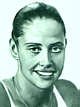
June Croft |
June
Croft
(Born1963)
Olympic Swimming Champion
Born in Ashton-in-Makerfield in Wigan
in 1963, June Croft is a member of the Wigan Wasps Swimming Team,
and trained at the Wigan International Swimming Pool. She was
British record holder and champion from 1974-1984, breaking the
world record for the 200 metres at the Commonwealth Games in Brisbane
in 1982 by completing the distance in under 2 minutes. In the
1980 Olympic Games she won silver and bronze medals and has been
three times Commonwealth Games Gold Medallist.
Back
to Top
|
|
|
|

Peter Kane
|
Peter
Kane
(1918-1991)
World Champion Boxer
Born on 28th February 1918 in Heywood, Lancashire, Peter Caine
trained out of a gym in Golborne, where his family had moved to
live when he was a very young child. Kane was a blacksmith in
the neighbouring district of Lowton, and lived in a bungalow on
Liverpool Road, Pewfall, near St Helens for most of his professional
career. Following in his father's footsteps, he began boxing at
16 years of age and took the professional name 'Kane'.
He went on to win lasting fame as a boxer, and became World Flyweight
Boxing Champion retaining the title from 1938-1943. Kane was rated
as one the hardest hitting flyweights of all time, his power,
no doubt, down to his well developed upper body resulting from
his continuing life as a blacksmith, even though his career was
put on hold while he fought in the Second World War.
Controversially, the ownership of his birthright is still fiercely
contested by Warringtonians and Wiganers alike, both claiming
him as one of their own. This probably came about when the district
of Golborne was 'transposed' into Wigan Metropolitan County Borough
in the 1973 boundary reorgnisation which created the Greater Manchester
Metropolitan County and effectively took many old Lancashire districts
out of that county. Numerous other similar boundary changes occurred.
Natives of Golborne, I understand, still defiantly regard themselves
as belonging to Warrington in Lancashire, despite official boundary
changes which have placed it in Greater Manchester for the last
thirty-odd years.
In 2001 Wigan MBC created Peter Kane Square in Golborne and placed
a £120,000 commemorative monument there in his honour, to
the evident displeasure of other Warrington Lancastrians, and
the author of this entry has received several emails concerning
the dispute, which he fears will never be completely resolved.
Peter Kane died in 1991 but will always be remembered as a fighter
who won 127 of his 137 professional boxing tournaments.
Back
to Top
|
|
Books, VHS and
DVDs about Mike Atherton
|
Mike
Atherton
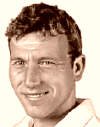
(b. 1968)
England & Lancashire Test Cricketer
Born
Michael Andrew Atherton on 23 March 1968 in Failsworth, Manchester,
he attended the Manchester Grammar School, where he was captain
for three years.
His
early potential was spotted at school and, by the age of 16 he
had already captained the England Under-19 cricket team. He toured
with England Young Cricketers to Sri Lanka in 1986-87, and to
Australia in 1987-88, while studying History at Cambridge.
He made
his debut for Lancashire in 1987 and won his county cap in 1989.
His First Class Cricket Test debut was against Australia at Old
Trafford, Manchester in 1989. Later, a match against New Zealand
established him as the youngest ever Lancastrian century-maker
with a score of 151 at Trent Bridge Cricket Ground.
He was
named Wisden Cricketer of the Year 1991. In the summer of 1993
the England team selectors offered him the position of captain
- he was then just 25 years old. However, his relationship with
the press was not always a happy one and earned him the title
of "Grumpy".
His
remarkable powers of concentration, an inborn northern stubborn
streak, allied to an immaculate technique made him a leading all-rounder,
though it is as a defensive player that he will be remembered.
Only
a degenerating back condition ruined an otherwise promising career
as a leg-spin bowler, and he actually took over 100 first-class
wickets Injuries ruled him out of many test selections, and increasingly
he has found himself most frequently writing about, rather than
playing, cricket.
He made
his 100th Test appearance against the West Indies at Old Trafford
in 2000. Shortly after he announced his retirement from first-class
cricket.
Back
to Top
|
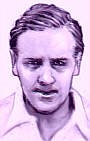
Harold Walden |
Harold
Walden
(1889-1955)
United Kingdom Olympic Soccer Team Champion
The last United Kingdom team to win the Olympic Soccer Champions
title at Stockholm in 1912. It included three men from the north-west
region, Walden, who was born in Ardwick,
Manchester on 10 October 1889, Berry from Liverpool and Hoare
from Glossop. These three scored all of Britain's 15 goals!
Harold Walden entered the army by joining the Cheshire Regiment
in 1903, and served in India and Ireland. He played for the Army
against the Navy in 1910 and 1911, and after leaving the army
went into the music hall as a performer in Yorkshire, where he
died, in Leeds in 1955 at the age of 66.
Source:
James W Bancroft Archive
Back
to Top
|
|
Books by Frank
Tyson
|
Frank
Tyson

(b.1930)
Northamptonshire & England Cricketer
Born
Frank Holmes Tyson on 6 June 1930 in Farnworth, Bolton, he became
a leading player in the Northamptonshire and England Cricket Teams.
He made his Test Match debut for England against Pakistan at the
Oval in London in 1954, and played his last Test Match against
New Zealand at Aukland in the 1958-59 season.
He was
named as Wisden Cricketer of the Year in 1956.
Not exactly a tall man but with his distinctive long run up and
powerful right hand bowling action he was a devastatingly fast
bowler, who was known as 'the typhoon'. Unfortunately, a hard
cricket ball blow to the back of his head from Ray Lindwall forced
him into a shortened career and early retirement, after which
he took up coaching.
Tyson's
bowling speed was actually measured at the New Zealand Aeronautical
College in Wellington in 1955, when he bowled a test ball through
a sonic beam - it was measured at 89mph - then one of the fastest
bowls ever recorded. Only Harold Larwood had produced significantly
faster results when measured by high speed photography at between
90 and 130mph! Tyson was at his best on the Australian tour of
1954-55 when he took 28 wickets at an average of 20.
By the
age of 70, he suffered some immobility following several operations
to replace his knees which he stated had been "worn out by fast
bowling." His lengthy run-up and demanding action restricted him
to only 17 Test Matches, and injury blighted his career. He was
regarded by most who played against him as being the fastest bowler
they ever faced.
Back
to Top
|
| |
John
Ephraim Sibbett
(1895-1950)
John Sibbett was born in Ancoats,
Manchester in 1895, and was one of Britain's most distinguished
racing cyclists. His career began in 1919, and his first major
win was in 1922 when he came first in the national 5 mile championships.
He excelled in both short distance sprint and long distance events
- in 1925 and 1927 he was national quarter mile champion and in
1929 he was national 25 mile champion. However, his biggest impact
was probably the national tandem championships which he won eight
times, five with his partner, E. H. Chambers. In this partnership,
Sibbet won the Olympic event in 1928. He also participated in
the 1936 Berlin Olympics, when he was a member of the Manchester
Wheelers Club. Later, racing bicycles bearing his name became
internationally popular and the likes of champion Reg Harris usually
rode a Sibbet bike. He retired from active competition in 1938
and devoted his time to judging cycling events, on the basis of
which he became British Team Manager for the 1948 and 1949 World
Championships in Holland and Denmark. After a spell working at
the Ford Company factory during the Second World War, he continued
making hand-made cycles from 1946 onwards until his death in 1950
at the age of 55.
Source:
James W Bancroft Archive
Back
to Top
|
|
Books by &
about
Reg Harris
|
Reg
Harris

(1920-1992)
World Champion Cyclist
One of the
all time greatest names in international cycling was Reg Harris,
born in Bury in 1929. He went
on to become World Champion Cyclist, World Amateur Sprint Champion
in 1949, 1950, 1951, 1952 and 1954.
Harris
had left school aged 14 and had in the course of his career been
a successful businessman in his own right. He won his first prize
as a cyclist at the age of 16 (a chiming clock), and by 19 he
was captain of the British Cycling Team in the Italian World Championships.
Unfortunately,
was was declared and the team withdrew, and he had to wait until
after the war, until 1947, when he won his first World Championship.
In 1948
he went on to win 2 silver medals at the Olympic Games. Before
he retired he would be named Sportsman of the Year twice and awarded
the Order of the British Empire (OBE).
He attempted
a short comeback in 1974, but in 1975 he retired finally. He died
in hospital in Macclesfield in June 1992, after collapsing while
(still) riding his bike at the age of 72!
A memorial
statue now stands in the Manchester Velodrome (the National Cycling
Centre) in honour of his great achievements in cycling.
Back
to Top
|
|
Books by &
about
Chris Boardman
|
Chris
Boardman

(b.1968)
Olympic Cycling Champion
Christopher
Miles Boardman was born at Clatterbridge on the Wirral in 1968,
and joined the Manchester Wheelers Cycle Club as a junior. He
helped the club win 20 National and team titles in five years,
and from the earliest days of his cycling career it was clear
to those who knew him that he was destined to be a great cycle
champion.
In 1991
he moved to the GS Strada Team, based in Staffordshire, attracted
by good sponsorship backing. Within that year he had become reigning
British Champion at 25 miles, 50 miles and the Pursuit event,
and placed 9th in the overall World Championships.
By the
1992 Olympics at Barcelona, Chris had a new bike, an unauthodox
streamlined machine, designed especially for him by Lotus Engineering,
and he was sporting his new helmet, which earned him the nickname
"Darth Vader".
In the
Horta Municipal Velodrome, he went on to produce the fastest ever
outdoor time in the 4000 Metres Individual Pursuit event, and
in the final he took the World Championship and the Gold Medal.
His
new cycle caused a great deal of interest, and revolutionised
cycle design afterwards. He was awarded the CBE in the 1993 New
Year's Honours List. Since those games, the rules of the Pursuit
event have had to be revised to take account of the new technology
in cycle design, and Boardman has become World Record Holder of
the 4000 metres and the 5000 Pursuit events.
In 1993
he achieved the World One Hour Cycling Championship, at Bordeaux
in France, covering a distance of 52.270 kilometres in the time.
Back
to Top
|
|
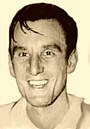
Fred Perry
|
Fred
Perry
(1909-1995)
Champion Tennis Player
Born 18th May 1909 in Stockport,
Frederick John Perry was the three-time Wimbledon Champion tennis
player (from 1934 to 1936), the first player to win all four Grand
Slam singles titles, and the last Briton to win the All-England
men's title. As well as his three Wimbledon Championships, he
also achieved three US Championships, an Australian, a French
and subsequently went on to pursue a successful and lucrative
professional career.
Perry was a latecomer, not taking up tennis until he was 18 years
old. However, he had been playing table tennis (Ping-Pong) for
many years, and with good coaching, he took to the game quickly.
Perry became known for a devastating backhand delivered with surprising
pace. Somewhat of a poseur on court, Perry was a handsome figure
with regular features, raven black hair, and the 'perfect' tennis
players physique.
From 1933 onwards, Perry led the British team to significant victories
over the USA and France, and brought the Davis Cup back to Britain
after 21 years absence. Britain was to retain the Cup through
1936 as Perry was to win every singles match he played. England
had not produced a Wimbledon singles champion to compare with
him for a quarter-century. Perry also went on to win the US Pro
Championships in 1938 and 1941. After his playing career ended,
he was, (and is) associated with the manufacture of tennis clothes,
as well being a tennis correspondent and commentator for radio
and television coverage of tennis matches - particularly at Wimbledon.
He was elected to the Wimbledon Hall of Fame in 1975 and died
on 2nd February 1995 in Melbourne, Australia, and will be long
remembered as possibly England's greatest ever tennis player.
Back
to Top
|
|
Books &
DVDs by
John Virgo
|
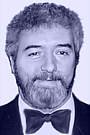
John
Virgo
(b.1946)
Snooker Champion
Born in Rochdale on the
3rd of March 1946, John Virgo is perhaps best known nowadays as
a television personality on the BBC "Big Break" show. However,
during the late 1970s and 1980s, he was rated as one of the best
players in international snooker. Virgo was at one time a bank
clerk, and learned his snooker skills in the Potters Club in Salford,
(still popular among many professional snooker players today).
He went on to win the National Under-16 and Under-19 titles in
1962 and 1965 respectively.
There followed a succession of victories and in 1977 he was persuaded
to turn professional and reached the UK semi-finals in that year.
He also reached the UK quarter-finals in 1978, with his best ever
ranking at 10th position.
Though apparently serious and even morose at the snooker table,
Virgo has a ready wit, and his exhibitions were always in great
demand, as much for his comedy impressions as his trick pot-shots.
This led in turn to the development of what was to become, effectively,
a second career in entertainment - fortunately, as his snooker
fortunes tended to decline during the late 1980s, and he subsequently
quit the professional snooker circuit in 1994.
However, the 1990s saw him doing a great deal of exhibition playing
and comedy routines. During this time, besides his now successful
cabaret act, he was chairman of the World Professional Billiards
& Snooker Association for two years. Inevitably, TV commentating
was to follow. And, when BBC Television planned to launch "Big
Break", a peak viewing snooker based gameshow in the mid 1990s,
Virgo was offered the job as partner to Jim Davidson. The show,
and Virgo's part in it, has been a great and continuing success.
John Virgo's
honours include:
- UK Professional
Champion - 1979
- World Professional
Snooker Championship semi-finalist,1979
- Professional
Snooker League Winner, 1984
- Pontins
Professional Champion, 1980
- National
Under-16 Snooker Champion - 1962
- National
Under-19 Snooker Champion - 1965
- National
Pairs Champion - 1975 ( with Paul Medati)
See
Also :
Manchester Footballers
Back
to Top
|
|