|
NAVIGATION









































Virtual
Hosting by

TheServerBank
Wigan
World
www.wiganworld.co.uk
An independent website about Wigan - containing photos old and new,
dialect, history, news, forums and much more. Regularly updated.
Just
Wigan
www.justwigan.com
Commercial website full of classifieds (motors, houses, accommodation,
small ads, etc).
Everything in Wigan.
Updated daily.
Photos
by Gary Burns
|
 |
 |
The
Borough of Wigan
In the Greater Manchester Metropolitan County
|
|
|
|
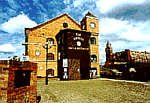
Wigan Pier
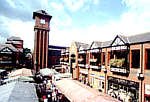
The Galleries
Shopping Centre, Wigan
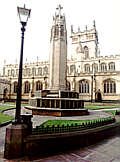
All Saints Church,
Market Street

Trencherfield
Mill
|
Wigan &
Wigan Pier
Lying at the
west extreme of the Greater Manchester County, Wigan and its surrounding
areas are probably best known for its coal-mining, its Rugby League,
and for the reference to its famous Pier by George Orwell in his
book about working-class life in the north in the 1930s. Yet this
one-time music hall joke has been refurbished and restored in
recent years.
The collection
of canalside warehouses and wharves, a major trading stop on the
Leeds-Liverpool canal has become a major tourist attraction in
the town.
Not to be
missed by the visitor is Wigan Heritage Centre, with its permanent
exhibitions, a reconstructed 19th century schoolroom with living
actors in period costume, its canal boat rides and full-time Piermaster.
There are also displays of old trades, including clog-making and
textiles.
Wigan Pier is located on the A49 road at Wallgate, just south
of the town centre.
Once a major
northern coal producing town, (records show that the first coal
pit was begun in 1450), Wigan has developed into a modern town
with many attractions.
Once Wigan
boasted over 1000 pit shafts within 5 miles of the town centre,
but these have all gone and the over 2000 acres of industrial
dereliction which they created has been cleared and redeveloped
in the past few years, and slag heaps have given way to landscaping
and green developments.
|
Further
along the canal is the Trencherfield Mill, which houses what
is claimed to be the world's largest working mill steam engine,
(several others make similar claims), with its giant flywheel,
which can be seen working daily, as part of the history of cotton
spinning in the region.
Wigan is
an old town, with a Charter dating back to 1246. Its parish
church, All Saints, in Market Street dates back to the 13th
century. In this church is the tomb of Sir William Bradshaw
(sometimes called Bradshaigh), and his wife Mable, (who had
bigamously remarried supposing him to be dead). According to
one account of the legend, in 1324, ten years after leaving,
radshaw
returned from the wars in Scotland, promptly killed his wife's
new husband, and made her walk barefoot and dressed in sackcloth
to their home at Haigh Hall once a week for the rest of her
life. The account was made into a novel by Sir Walter Scott,
and the event is still marked by Mab's Cross in Wigan Lane
History
of Wigan
Over 2,000
years ago, Celtic warriors settled in Wigan, and later the Romans
built a fort there, known as Coccium; excavations in recent
years have uncovered evidence of a major Roman presence.
By the time
of the Middle Ages, Wigan had become a constituent manor of
the Barony of Makerfield, and it had received its Royal Charter
from King Henry III in 1246 when it was made into a Borough
in its own right. Its new status as a Royal Borough is reflected
in the insignia of the town Coat of Arms. Lancashire had only
four Royal Boroughs - Lancaster, Liverpool, Preston and Wigan.
In 1996
Wigan officially celebrated the 750th anniversary of the Charter,
and local artist Gerald Rickards was commissioned to paint a
37 foot long mural recording this - it can be seen in the new
History Shop Gallery in Rodney Street (Telephone: 01942-828128).
In 1974,
when local authorities and boundaries were changed, Wigan became
a constituent Metropolitan Borough within Greater Manchester.
Within the borough are included the old township of Leigh, as
well as the smaller towns and villages of Abram, Ashton-in-Makerfield,
Aspull, Astley, Atherton, Billinge, Golborne, Haigh, Hindley,
Ince, Lowton, Orrell, Pemberton, Shevington, Standish, Tyldesley
and Winstanley. (See next - Towns &
Villages of Wigan).
The origin
of the town's name is mysterious - there is no reference to
it in the Domesday Book. During the Civil War, the town was
fiercely Royalist, for which support King Charles II presented
Wigan with a sword bearing the Royal Coat of Arms; it still
remains part of the town's civic regalia to this day. This fierce
loyalty was due no doubt to the fact that the Earl of Derby,
one of Lancashire's largest landowners and Commander of the
King's Forces in Northern England, had made Wigan his headquarters.
Nearby Parliamentary forces from Bolton captured Wigan in 1643,
looting the town and demolishing its fortifications. In 1648
Cromwell himself headed troops into battle at Standish, and
the last battle of the Civil War was fought outside Wigan on
the banks of the River Douglas on 25th August 1651. This became
part of local folklore and was to be known as "the Battle
of Wigan Lane".
The Earl
of Derby, James Stanley,
was subsequently arrested and executed at Bolton. Wigan also
witnessed the very last act of the Stuart Cause in 1745, when
the Young Pretender, Bonnie Prince Charlie, passed through the
town and lodged at Hallgate for a time after losing the battle
at Derby.
In the 19th
Century, like so many Lancashire towns, Wigan bore the full
brunt of the Industrial Revolution and saw dramatic economic
and demographic expansion due to its industries and its well
provided canal system.
Armorial
Bearings of Wigan
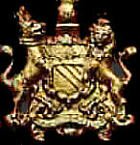
 Wigan Coat
of Arms
Wigan Coat
of Arms"Gules
a Castle with three Towers Argent surmounted by a Crown composed
of Fleur de Lys Or, and for the Crest, on a Wreath of the Colours.
In front of a King's Head affrontee couped below the Shoulders
Proper, vested Gules, Crowned and Crined Or, a Lion couchant
guardant Or. On Either Side a Lion Or holding in the exterior
Paw a branch of Mountain Ash Proper".
Explanation of Wigan Coat of Arms
Despite
its ancient origins, Wigan was unique amongst the Greater Manchester
Boroughs in having no formal Coat of Arms until quite recent
times. It was not until 1922 that Arms were granted by the Royal
College of Arms.
The red (Gules) shield bears a three-towered castle in silver
(Argent), surmounted by a crown of gold (Or) composed of Fleur
de Lis.
Above
the shield is the Crest which comprises a red and silver wreath
on which rests the helmet (or helm) with a king's head in natural
colours, cut off just below the shoulders (Couped), wearing
a red robe (vested gules). In front of the king a golden lion
lies (Couchant) facing us.
On
either side two gold lions support the shield and carry in their
outer paws a branch of the Mountain Ash (known in local dialect
as the Wiggin Tree). This is a typical visual pun on the town
name, quite common in English heraldry.
At the base is a scroll with the town motto "Ancient and Loyal".
It is a very distinguished and unusual Coat of Arms inasmuch
as it bears so many positive references to the monarchy.
The
incorporation of Royal insignia into Arms has always been a
privileged and much sought after honour, and jealously guarded.
While the king's head itself refers to no particular monarch,
it is thought to be a representation of King Henry I. The couchant
lion next to the king's head, and the two lion supporters are
also elements usually found in royal Coats of Arms.
Wigan's
12th century seal also shows the three-towered castle, or castellated
gateway. These symbols indicate that Wigan was a town of consequence
and had Royal favour and patronage in medieval times. Even the
motto is in keeping with the "Royal" nature of the Arms. When
King Charles II granted the town's charter, it was recognised
as "an ancient borough" and granted "a special token of our
favour for its loyalty to us" - the "Ancient and Loyal" motto
is a clear reference to this.
See
also :
|
|