NAVIGATION









































Virtual
Hosting by

TheServerBank
Drawings
by John Moss
|
 |
 |
Manchester
Science & Discovery (1 of 5)
|
|
Books about
John Dee
|
John
Dee

(1527-1608)
Born
in London in July 1527, John Dee was a celebrated scientist in
his day and a delver into the occult. Of over 80 books which he
wrote, they cover such diverse subjects as Navigation, Mathematics,
Theology, Politics and Astronomy.
A friend,
astologer-adviser and confidant of Queen Elizabeth I, he was widely
travelled, possibly as a spy for the royal court, and an avid
collector of books.
He came
with his wife and seven children to Manchester in 1596 to take
up the position of Warden at the Collegiate Church (now Manchester
Cathedral), already famous for his learning and occult
leanings.
He was
a controversial figure, and parishioners did not take well to
him - they disliked his sermons as well as his selection of curates,
but the more superstitious among them consulted him on matters
of witchcraft.
He also
functioned as surgeon. Suspicions about his occult practices gave
him a bad reputation, and in 1604 he petitioned King James to
clear his name. His request was, however, denied, and he was forced
to leave Manchester to return to a home in Mortlake where he suffered
the direst poverty, often selling his beloved books to feed his
family. He died in 1608 aged 81.
Back
to Top
|
|

Charles White
|
Charles
White
(1728-1813)
Born in Manchester, the son of a physician, Charles White studied
medicine at London and Edinburgh, and on graduation took a partnership
in his father's practice. In collaboration with the merchant Joseph
Bancroft, he founded the Manchester Royal Infirmary in 1752, the
first hospital in the area - it served not only Manchester, but
it drew patients from as far afield as Derbyshire and the West
Riding of Yorkshire.
Initially, the hospital was a small affair, set in a house at
Garden Street in Shudehill, but in 1756 it moved to larger premises
in Piccadilly, on the site of present day Piccadilly Gardens.
White worked as a surgeon at the Infirmary for 28 years, and in
1790 he also helped set up the first "lying-in" hospital in Manchester,
near the Old Bailey Prison in Salford (now St Mary's Hospital).
His main specialism was in obstetrics, where his modern practices
earned him an international reputation. His work resulted in a
massive drop in the rate of infant mortality.
He published his findings in a book, "The Management of Pregnant
and Lying-in Women" in 1773. The book was reprinted many times,
and translated into several foreign languages, becoming the standard
medical reference work on pregnancy and childbirth. He also advised
Elizabeth Raffald
in writing her book on midwifery. In 1762 he was admitted to the
Royal Society and became a member of the Corporation of Surgeons
(now the Royal College of Surgeons).
He was also a literary man, and helped found The Manchester Literary
& Philosophical Society, and was its first vice-president. He
also took part in founding the College of Arts & Sciences, where
he lectured on anatomy. His interests included botany, and he
kept an extensive collection in a museum at his home in King Street,
Manchester. He died at his country home at Sale Priory in 1813
after a long illness of epidemic ophthalmia which made him go
blind.
There is a monument to the White family in the church at Ashton-on-Mersey.
Back
to Top
|

Thomas Percival |
Thomas
Percival
(1740-1804)
Born in Warrington in 1740, the son of a local merchant, Thomas
Percival chose to follow the profession of his grandfather and
uncles - that of a physician. Both of his parents died when he
was a very young boy, and he was raised by a sister. He was educated
at Warrington Grammar School and at Warrington Academy. Later
he followed by studying Medicine at Edinburgh University, where
he came into contact with several Scottish intellectuals, including
David Hume.
On graduation, Percival returned to Warrington, where he married
and established a medical practice, though in 1767 he moved the
practice to Manchester. He was a prolific author, and apart from
several childrens' stories, he published two volumes of essays
: "Essays, Medical and Experimental" in 1767, and "Essays, Medical,
Philosophical and Experimental" in 1773 - both books found popular
praise from the critics. In 1770, concerned by the high rate of
mortality in Manchester, he began to study death records in an
attempt to discover the causes.
He isolated several now self-evident causes - poverty, malnourishment
and lack of public hygiene. He made specific proposals for the
more detailed and accurate keeping of official death records.
His work caused him to develop a great deal of sympathy for the
poor of Manchester, and he became more involved in reforms aimed
at correcting the worst effects of poverty - these included reforming
the conditions of work in factories. With other local men like
Thomas Henry and the Rev. Dr Barnes, Percival was instrumental
in 1781 in setting up the Manchester Literary and Philosophical
Society, which he started in his own home. It grew so large that
another meeting place had soon to be found. Percival was President
of the Society for the most part of his life. In 1803, Percival
published a document on medical ethics; this laid down strict
rules of conduct for medical practitioners. His Code was the basis
of the "Code of Ethics of the American Medical Association" drawn
up in 1849.
A man of great charisma, Percival numbered Voltaire and Diderot
amongst his friends. Thomas Percival died in 1804.
A monument to his memory stands in Warrington Parish Church, and
an inscribed tablet can be found in the rooms of the Literary
& Philosophical Society.
Back
to Top
|
|
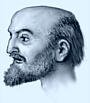
William Crabtree
after Ford Madox Brown's painting in Manchester Town Hall
Books about
Crabtree
|
William
Crabtree
(1610-c1644?)
William Crabtree was born in Broughton in Salford and was educated
at the Manchester Grammar School. A good marriage to Elizabeth,
who came from a wealthy family in Pendleton made him financially
secure, though he continued to work as a merchant, while pursuing
his great enthusiasm for Astronomy in his spare time. His precise
calculations revealed the inaccuracy of many of his contemporary
astronomers, and he made new careful measurements of the movement
of the planets. Using a decimal system he rewrote the Rudolphine
Tables of Planetary Positions. In 1636 he befriended the young
Jeremiah Horrox, also a keen amateur Astronomer. Together they
observed, plotted and recorded Horrox's predicted transit of the
planet Venus across the Sun on 24th November 1639, and on the
basis of their calculations, predicted its next occurrence on
8th June 2004. Horrox's death in 1640 was a great blow to their
collaboration, and little is known of Crabtree's work after that.
There is even uncertainty as to the exact year of his death -
various accounts record the date as 1644, 1652 and 1653. Crabtree
is celebrated in Manchester
Town Hall, where he is the subject of one of Ford
Madox Brown's murals "Crabtree Rapt in Contemplation".
Back
to Top
|
|
Books by and
about Marie Stopes
|
Marie
Stopes

(1880-1958)
Doctor
Marie Stopes, world renowned pioneer of birth control for women
was the first female lecturer at the University of Manchester.
From
the start she was an exceptional high-flyer, taking just 2 years
to complete her degree botany and zoology, (instead of the normal
three), and then gained her doctorate which she completed in German.
Her
marriage to Dr Reginald Gates, having been annulled in 1916 on
the grounds of non-consummation, she learned about sex from books
in the British Museum - it was the self-realisation of how ignorant
she had been, and more generally the ignorance with which most
of the women of her day entered marriage, that led to her writing
her first and best-selling book "Married Love" in 1918.
At the
age of 37 she married again, this time to aircraft manufacturer
Humphrey Verdon Roe, (partner of Sir A.
V. Roe), and in 19921 she opened her first birth control
clinic.
The
clinic was free, aimed at poor women, and publically declaimed
as "criminal", particularly by Catholic clergy. In the
event Stopes sues a local Catholic doctor for slander and won
her case in court, though it was lost under appeal to the House
of Lords.
Nevertheless,
her work attracted many awards as it also attracted criticism.
Her professional and personal life was dogged by controversy until
her death in 1958.
Back
to Top
|
| |
Colonel
Sir William Coates
(1860-1962)
Although born in Worksop, Nottinghamshire, William Coates moved
to live in Moss Side, Manchester in 1884. He joined the 20th Lancashire
Volunteer Corps which later became the Manchester Regiment Territorial
Army as acting surgeon with the rank of Captain. He married Nora
Freeland, who, later as Lady Coates, was Vice-president of the
Whalley Range Division of the British Red Cross Society. Coates
was to live in Whalley Range right up to the time of his death
in 1962. In 1900 he became President of the Manchester Medical
Society. By the outbreak of the Great War in 1914, Coates was
serving in South Africa and was later appointed Assistant Director
of Medical Services for the Western Front, and remained active
in both surgery and the Territorial Army until 1946. He died in
1962 at the age of 102 years
Back
to Top
|
| |
Robert
Angus Smith
(1817-1884)
In 1872, Doctor Robert Angus Smith was the first to identify the
phenomenon now known as "acid rain", in Manchester. Angus Smith
was most active and probably the first to campaign for the introduction
of smokeless fuels. He worked from his laboratory near All Saints
Church in Rusholme and was appointed in 1863 as Manchester's first
Alkali Inspector, and published "Air & Rain: the Beginnings of
Chemical Climatology". Manchester and Salford were the first in
Britain to have smokeless zones, thanks largely to Smith's pioneering
work. Salford first introduced smokeless zoning to the Fairhope
and Ladywell Districts in 1949, while the Manchester Corporation
Act of 1946 led directly to the first controlled zones in 1952,
followed by 105 acres of central Manchester in 1956. In July 1972
Salford declared itself to be the world's first fully smoke-free
zone.
Back
to Top
|
|