Manchester
& the Northwest Region of England
Papillon Graphics' Virtual Encyclopaedia
of Greater Manchester
Including
the Boroughs of Bolton, Bury, Oldham, Rochdale, Salford, Stockport, Tameside,
Trafford & Wigan
NAVIGATION
Virtual
Hosting by
TheServerBank
Drawings
by John Moss
Manchester
Celebrities
Authors, Novelists, Writers & Poets (1)
Books about
Anthony Burgess
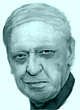
Anthony
Burgess
(1917-1993)
Probably now remembered best for the Stanley Kubrick film made
of his novel "The Clockwork Orange", he was born
John Anthony Burgess Wilson on 25th February 1917 in Harpurhey,
Manchester, the son of a book-keeper and music-dance teacher.
Both his mother and sister died of Flu when he was only 3 years
old. He was educated at Xavarian College in Moss Side and at Manchester
University, spent six years as a soldier and became a n education
officer in Malaya and Brunei. He was invalided home in 1959, and
took to writing. Some 50-odd books later and he had become a leading
novelist on the world's stage. Retired to live in Monaco and died
of lung cancer in 1993 at the age of 76.
(1903-1974)
Born in Salford to a poor working class family in 1903, Greenwood
owed his eventual wealth and fame to that background which had
provided the material for such novels as "Love on the
Dole" and "There was a Time". He attended
the council school in Langworthy Road, but left at 13 years of
age. Thereafter he was self educated, and studied regularly at
Salford Library. His writing proved very popular, and books like
"His Worship the Mayor", "The Secret Kingdom"
and "The Cure for Love" added wealth to his fame.
He eventually moved to live in a flat in Douglas, Isle of Man,
where he died in 1974. He was married to an American ballerina.
Salford University awarded him its first Honorary Doctorate in
1971, and on his death, his manuscripts and letters were bequeathed
to that university.
(1810-1865)
Born in Chelsea, London in 1810. Due to her mother's death when
Elizabeth was an infant, she was moved to Knutsford, Cheshire
to live with an aunt. She grew to love the town of Knutsford,
and this is evidenced in two of her books which are based on the
town - "Cranford" and "Wives and Daughters". After
her marriage to a Unitarian minister, she lived at various places
in Manchester including Chorlton-on-Medlock and Plymouth Grove.
Charitable, socially aware and politically conscious, much of
her material came through her husband. Her novel "Mary Barton"
was a best-seller, and was admired by Charles Dickens. She
contributed articles to his periodical Household Words. Also wrote
"Ruth", "North and South" and a biography of Charlotte
Brontë. By 1865, the year of her death, she was a phenomenal literary
success. She is buried in Knutsford Unitarian Chapel.
(b.
1939)
Born in Salford in 1939 of Irish descent, the daughter of a local
transport worker, and was to become known as one of a generation
of so-called 'Angry Young Women' writers of the 1950s. She attended
Pendleton High School, where she was actively encouraged to write
by an enlightened headmistress. On leaving school she had many
brief jobs before becoming a research photographer with the Metropolitan
Vickers Company (MetroVicks) in Trafford Park.
Her writing was steeped in her childhood experiences of life in
the industrial north-west of England, and her roots were to provide
the background to many of her most celebrated plays and novels.
Perhaps her most famous, "A Taste of Honey", set in 1950s
Salford, and later made into a film starring newcomer Rita Tushingham,
was classified by critics as a 'kitchen sink drama' or else it
came from the 'kitchen sink school of playwriting'. Delaney herself
objected to the "glib label" however, and a programme note to
this effect was included when 'A Taste of Honey' premiered on
27th May 1958 in London. Opening to strong critical acclaim, when
she was barely 20 years old, it angered many Salfordians, for
the unflattering glimpse of Salford it showed, with its post-war
decay and the industrial grime of Salford Docks and the Ship Canal,
around which most of the film was set. Yet the play had warmth
and humour, despite its authenticity and seaminess.
Her second play "The Lion in Love" opened in London, just
before 'A Taste of Honey' premiered on Broadway, and helped promote
her further as a playwright of international appeal and stature.
By 1961 she had already won the New York Drama Critic's Award
for best foreign play, and by then her work was popular in theatres
in Britain and America. Her plays continue to be popular period
dramas based on her childhood experiences in Salford.
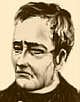
(1785-1859)
Born in Manchester in 1785 and baptised in St Ann's Church, De
Quincey was the son of a linen merchant in Market Street Lane.
Shy and retiring, he was often severely bullied by his brothers.
The family moved to a house in the country called "Greenhay",
about a mile from the town centre in 1791 - subsequently it became
the urban district of Greenheys. Educated in Bath and The Manchester
Grammar School, and later, in 1803 at Oxford. Frequently in ill-health
and impoverished, living in London and Scotland, he published
"Confessions of an Opium Eater" as a serialised work in
the London Magazine in 1821. Close friend of William and Dorothy
Wordsworth, and many other romantic poets of his day. Wrote "Reminiscences
of the Lake Poets". Drug addicted and impoverished, his writings
became more obscure and mystic. Almost complete mental collapse,
died penniless in 1859.
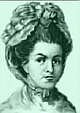
(1733-1781)
A businesswoman and writer, Elizabeth Raffald was mother to 6
children. Born in Doncaster in 1733, she worked as housekeeper
to several families, the last of which, Arley Hall in Cheshire,
was where she met and married the gardener, John Raffald. They
moved to Manchester in 1763, where she kept a confectioner's shop
while her husband ran a market stall. They took over The Bull's
Head Inn in the Market Place, and later the King's Head Inn in
Salford. Here she developed her culinary skills, training young
ladies, collecting and inventing recipes and publishing "The
Experienced English Housekeeper" - an instant success, reprinted
many times, and much copied - it made her a wealthy woman. She
also opened, in Manchester, the first Registry for Servants, compiled
her "Directory of Manchester" and wrote another
book on midwifery. She died in 1781 and is buried at Stockport
Parish Church.
(1823-1897)
Born in Oldham in 1823, author of "The Manchester Man",
daughter of a local chemist and politician. She was active in
the Anti-Corn Law League movement, and published poetry, notably
"Ivy Leaves" (1843). She married Linnaeus Banks, a notable
lecturer and journalist, in 1846, and led a rather itinerant life
due to her husband's many job changes, to which various newspapers
she contributed regular articles. "The Manchester Man" was
serialised in Cassell's magazine, and revealed a hitherto unknown
graphic realism on life, customs and the social fabric of 19th
Century Manchester. She detested the "modernisation" of Manchester
in the light of industrial and social change which abounded around
her at that time. She died in 1897.