NAVIGATION









































Virtual
Hosting by

TheServerBank
Drawings
by John Moss
|
 |
 |
Manchester
Celebrities
Science & Discovery (2 of 5)
|
|

Books by &
about John Ferriar
|
John
Ferriar
(1761-1815)
Born in 1761
at Oxnam in Roxburghshire, John Ferriar was a famous physician
in Manchester, as well as a writer and literary critic. He had
studied medicine at Edinburgh University, graduated in 1781, and
worked in a practice in Stockton-on-Tees, before moving to manchester
around 1785.
In 1789 Ferriar was appointed physician at Manchester Infirmary,
where he introduced many reforms and practices to help in the
healthy recovery of patients. His campaigning led to the establishment
of a Board of Health, the prohibition of cellars as living quarters,
limits on domestic overcrowding and many other sanitary reforms
which improved the health and living conditions of the poor people
of Manchester.
He established the concept of the isolation ward for serious infectious
diseases (the "fever ward"), both in the Infirmary and at the
Stockport hospitals. He advocated shorter working hours, restrictions
on child labour, and the introduction of public baths to improve
hygiene.
He also wrote 4 volumes of medical histories. His literary interests
were many. He became a member of the Manchester Literary and Philosophical
Society soon after his arrival in Manchester, and here he presented
many learned papers, most of which were subsequently published.
His works include the paper "Of Popular Illusions", an
essay on the dramatist Massinger, and "Illustrations of Sterne".
By the time of his death in 1815 the Manchester Infirmary had
developed into a modern effective hospital with an unparalleled
reputation in the cure of fevers, and the control of epidemics.
He is buried in St Mary's Churchyard, and the memorial plaque
to his memory was removed when St Marys was demolished, and is
now located in St
Ann's Church in Manchester.
Back
to Top
|
|
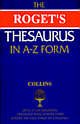
Roget's Thesaurus
Books by &
about Roget
|
Peter
Mark Roget
(1779-1869)
Peter Mark
Roget is best known for his "Thesaurus" nowadays, though he was
also one of the many famous physicians at the Manchester Infirmary
- and this was his primary work. He was born in London in 1779,
the son of a Swiss pastor of a French Protestant Church in Threadneedle
Street, London's celebrated banking area.
Roget studied Medicine and Mathematics at Edinburgh University,
and graduated as Doctor of Medicine in 1798, aged just 19 years.
As a young doctor he published several works on consumption (tuberculosis),
and wrote on the effects of the newly discovered chemical nitrous
oxide (known as "laughing Gas" and a major anaesthetic). On the
death of Thomas
Percival, the chief surgeon, in 1804, Roget was offered
the post, which he held from then until 1808. During this time
he worked to found the Manchester Medical School.
He also lectured on medical topics, and spoke at the Literary
& Philosophical Society, where he was vice-president for 2 years.
He was also the first secretary at the newly formed Portico Library,
where Manchester intellectuals gathered to read newly published
works. From 1808, Roget left Manchester and went to work in London,
where he continued lecturing on medical topics. He worked at the
Medical School in Windmill Street, and at the Northern Dispensary.
He was a Fellow of the Royal Society, and later its secretary,
and continued to write and to introduce several original inventions.
In 1840 he was effectively retired from medicine, but most of
his remaining years were to be spent compiling his now world famous
"Thesaurus of English Words and Phrases", first published
in 1852, and with 28 editions and reprints during his lifetime.
Roget's Thesaurus is still being printed today, and his name has
become synonymous with that work.
Back
to Top
|
|
Books by and
about John Dalton
|
John
Dalton

(1766-1844)
John
Dalton was born to a Quaker family in Eaglesfield near Cockermouth
in the English Lake District in 1766. His formal education is
unknown, though he was taught science in the evenings by Elihu
Robinson. Robinson and his friend, the philosopher Gough, were
to be instrumental in developing Dalton's interest in science
and natural philosophy.
An intelligent
boy, he actually taught at Eaglesfield School when aged just 12,
and later he and his brother were appointed teachers at a school
in Kendal.
At the
age of 27 his reputation as a promising young scientist had so
grown that he was offered a professorship in mathematics and natural
philosophy at the New College in Mosley Street in Manchester.
In the same year, 1799, he published his first book "Meteorological
Observations and Essays", which contained many ideas which
were to form the basis of his later work on the study of gases,
and from which he was to derive his fundamental laws of chemistry.
Although the college was moved to York in 1799, Dalton elected
to remain in Manchester, and made a living by privately teaching
mathematics at his home in Faulkener Street (now in the heart
of Manchester's Chinatown), and later in the basement of the Society
of Friends Meeting House in George Street.
A bachelor
who lived modestly, Dalton carried out most of his research here,
imposing upon himself a strict working regime. His only recreation
was a game of bowls on Thursday afternoons at the Dog & Partridge
pub. He shared accommodation for 26 years with the Reverend William
Johns and his family at number 10 George Street, but he lived
alone at 27 Faulkener Street towards the end of his life. Shortly
after arriving in Manchester, Dalton had joined the Literary &
Philosophical Society, where he delivered his first paper on colour-blindness
(of which some forms are still known as "Daltonism"), followed
by four other essays dealing with discoveries he had made about
the constitution of gases, evaporation, heat expansion, meteorology
and steam power.
His
further experiments led to the formation of his Atomic Theory,
for which he is universally best known. The result of this theory
was the tabulation of atomic weights and a mathematical basis
for chemistry, which had hitherto been haphazard and rather ad
hoc. In time he became president of the Literary & Philosophical
Society, and he continued to present papers on his scientific
discoveries for many years.
In 1833
the British Association offered him a pension, and he was to receive
many more honours in his later life; these included Honorary Doctorates
at the Universities of Oxford and Edinburgh. Upon his death he
was given a virtual state funeral - his body lay in state in the
Manchester
Town Hall, where it was visited by upwards of 40,000
people, and a hundred coaches followed the funeral cortege to
Ardwick Cemetery, where he lies buried.
He has
a street named after him in the city centre, a statue of him is
placed in the Town Hall entrance, and another stands outside the
former Dalton College of Technology (now part of Manchester Metropolitan
University) in Oxford Street.
He is also
the subject of one of Ford
Madox Brown's murals in the Manchester Town Hall.
Back
to Top
|
|

William Sturgeon
|
William
Sturgeon
(1783-1850)
William Sturgeon, the celebrated electrician and physicist, was
born in 1783 at Whittington near Kirkby Lonsdale. He had little
formal education, but was apprenticed as a shoemaker. He gave
up this to enlist in the Westmorland Militia, and joined the Royal
Artillery 2 years later. During this time he taught himself Mathematics,
Latin and Greek, intending to study of natural science, for which
he deemed these three elements essential.
Inspired by a bad thunderstorm, he began to investigate electrical
discharges such as lightening, a study which he continued after
leaving the army, and while holding various teaching posts in
Addiscombe. One of these posts was with the East India Company's
Military Academy, where he lectured on electro-magnetism, as well
as publishing his findings in scientific magazines.
In 1840 he was appointed to the post of Superintendent of the
Royal Victoria Gallery of Practical Science in Manchester, to
"stimulate research and foster inventive talent".
This institution was to produce many promising students, including
James Prescott
Joule, who contributed to the Annals of Electricity
magazine, which was edited by Sturgeon. Sturgeon lectured on many
scientific topics, including optics, magnetism and electro-magnetism;
he was popular with his audiences because of the clear delivery
and presentation of his material. However, the Victoria Gallery
ran out of money and closed down in 1842, leaving Sturgeon without
means or a job, and his life descended into poverty, supported
by occasional revenues from one-off lectures.
In 1847 he was given a grant of £200 by the Royal Bounty Fund,
to which a government pension of £50 a year was added later. This
was insufficient for his needs, however, and he died penniless,
better known in Europe than in his native England. He had been
responsible for the invention of the electromagnet, itself fundamental
to many later inventions which could not have been made without
it - among them the telegraph and the telephone. A monument to
him, "a poor man of science", is placed in Kirkby Lonsdale Church
in the Lake District, which commemorates many of his inventions
and discoveries.
Back
to Top
|
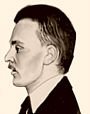
Hans Geiger |
Hans Geiger
(1882-1945)
Born Johannes Wilhelm Geiger, physicist Hans Geiger was born in
Neustadt, Germany, in 1882. In 1902 he studied physics in Munich
and Erlangen and attained his doctorate in 1906 before moving
to Manchester to study under Ernest
Rutherford in 1907. In 1912 he became leader of the Physical-Technical
Reichsanstalt in Berlin, in 1925 was appointed professor in Kiel,
and by 1936 was working in Berlin. While there, together with
the graduate student Walter Muller, he developed, his Geiger Counter.
Geiger did most of the original so-called "Rutherford scattering"
experiment with Marsden - as a result of this work he devised
his ionisation counter. Together with Walter Miller he developed
this into the Geiger counter.
He was one of the discoverers of the Geiger-Nuttal law and performed
experiments that lead to Rutherford's atomic model. He was also
a member of the Uranverein (Uranium Club) in Nazi Germany. This
was the group of German physicists who worked to develop a German
atomic bomb. It is thought that Geiger held an unwavering loyalty
to the Nazi Party and it is alleged that this led him to betray
many of his Jewish colleagues.
Back
to Top
|
|
|
|