NAVIGATION









































Virtual
Hosting by

TheServerBank
Drawings
by John Moss
|
 |
 |
Manchester
Politicians, Law & Social Reformers (4 of 12)
|
|
Books about
Lloyd George
|
Lloyd
George PM MP
1st Earl Lloyd-George of Dwyfor
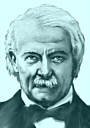
(1863-1945)
It is a little-known fact that David Lloyd George was actually
not born in Wales, but in Chorlton-on-Medlock in Manchester on
17 January 1863, the son of William George, a local headmaster.
After
his father died in 1865, David and his mother moved to Llanystumdwy,
in Gwynedd, North Wales to live with his mother's brother, who
was a shoemaker and Baptist master. David almost certainly acquired
his radical political views and his Welsh nationalism from his
uncle. He attended the village school, where he was good at Geography
and Mathematics, and at 16 he was apprenticed to a solicitor's
office.
Although
he qualified as a solicitor, Lloyd George never really practised
Law, but was elected to parliament as a representative of the
Liberal Party in 1890, and was to remain MP for the Caernarfon
constituency for the next 55 years. The Liberal Party won a landslide
victory at the 1906 general election and Lloyd George was appointed
to be President of the Board of Trade.
By 1908 he had become Chancellor of the Exchequer and made his
mark by proposing the first Old Age Pensions Act. In 1911 he continued
with his radical social reforms by introducing the National Insurance
Act which was designed to insure workers against sickness and
unemployment.
At
the outbreak of war in 1914, Lloyd George was appointed as Asquith's
Minister of Munitions - by 1916, largely as a result of his success
in this Ministry, he was made Minister of War. However, Asquith
was a notoriously weak war leader, and he resigned in December
1916, when Lloyd George became Prime Minister.
At
the end of the Great War, Lloyd George attended the Paris Peace
Conference in 1919 and warned against the harsher proposals of
the Treaty of Versailles. Meanwhile, at home Britain was facing
an economic shock as nearly four millions soldiers returned home
to find little or no work. Further, in Ireland, violence and powerful
nationalist feelings had forced the partition of the country and
setting up of an Irish Free State in 1920. Lloyd George's post-war
coalition began to fall apart and Lloyd George resigned in 1922.
He
would never serve in government again despite leading the Liberal
party from 1926 to 1931.
Shortly
before his death in 1945 he received the title Earl Lloyd-George
of Dwyfor.
Back
to Top
|
|
Books by
Margaret Beckett
|
Margaret
Beckett MP

(Born
1938)
Born Margaret Jackson at Ashton-under-Lyne in 1938 into a comfortable
middle class family, she was to become one of the most influential
women in British politics at the end of the twentieth century.
As leader of the House of Commons under Tony Blair's Prime Ministership
since 1997, she is well known for her plain speaking and indomitable
debating style, giving her an equal standing amongst an otherwise
male dominated government cabinet.
Her father had died when she was only 12 and Margaret began a
five year engineering apprenticeship and had gone on to study
for a degree in Metallurgy at the University of Manchester.
By the time of the 1964 general election, she had begun working
for the local party office as a researcher, and worked her way
up through the party until she was selected as the Labour Candidate
for Lincoln in the 1974 election, significantly reducing the opposition's
majority in that city, before winning the seat later, in October
of that year. She is married to Leo Beckett.
Back
to Top
|
|
Books by Hugh
Scanlon
|
Hugh
Scanlon
President of the Allied Union of Electrical Workers

(Born
1913)
Born Hugh Parr Scanlon in Salford on 26th October 1913, he was
a leading Trades Unionist on the national scene in the 1950s and
60s, and was made Lord Scanlon of Davyhulme in 1964. His parents
had emigrated to Australia in 1911, but his father had died within
a year and his widowed mother returned to England with two children
and expecting Hugh as a third. Back in Manchester, living with
in-laws, she found work at the local Co-op Soap Factory. As Hugh
grew, he attended St Mary's School in Davyhulme, Manchester. He
helped finance the family by doing a newspaper delivery round
during his lunchtimes and after school in the evening.
At 14 he became apprenticed at the Metro Vickers Factory in Trafford
Park, was a shop steward by the age of 23, and was elected to
the position of President of the AUEW - the Associated Union of
Engineering Workers, at the age of 32.
Scanlon went on to become a member of the Trades Union Congress
national Congress for 10 years where he became known as a tough
negotiator, and celebrated for his distinct lack of humour. He
eventually resigned in 1959 and was raised to the peerage some
five years later for his services to industry.
Back
to Top
|
|
Books by
Ernest Marples
|
Ernest
Marples MP
Baron Marples of Wallasey - Minister of Transport
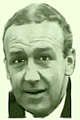
(1907-1978)
Born Alfred Ernest Marples in 1907 at Henshaw Street in Stretford,
this local elementary schoolboy succeeded in becoming Postmaster
General and Minister of Transport during his time as a member
of the Conservative Government Cabinet. He was eventually to be
given the title Baron Marples of Wallasey.
His father had been a renowned engineering charge-hand and Manchester
Labour campaigner, and his mother had worked in a local hat factory.
Ernest attended Victoria Park Council School and won a scholarship
to Stretford Grammar School, but by the age of 14 he was already
active in the Labour Movement, as well as earning money selling
cigarettes and sweets to manchester football crowds. He also played
football for the YMCA team.
There followed a succession of jobs - miner, postman, chef, and
accountant. Eventually he joined the Territorial Army, and rose
to the rank of Captain. During this time his whole perception
seems to have changed, as, by 1945 he had become a prospective
Conservative candidate and was elected to Parliament, and also
set up his own company of Civil Engineers (Marples, Ridgeway &
Partners) with his meagre savings and a bank loan.
Professionally, as a member of the government, he is best known
for having introduced the STD telephone system (Subscriber Trunk
Dialling) which eliminated the use of operators on national phone
calls, and as Minister of Transport he brought in roadside yellow
lines, parking meters and seat belts. It was also under Ernest
Marples that Dr Beeching was brought in to controversially cut
the British railway system down by two-thirds. Marples emigrated
to live in Monaco after his retirement from politics and he died
in 1978.
Back
to Top
|
|
Books by and
about Henry Hunt
|
Henry
Hunt
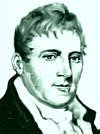
(1773-1835)
Henry Hunt is indelibly associated by local Mancunians with the
so-called "Peterloo
Massacre", though he was already well known as a political
radical long before the episode at St Peter's Fields in Manchester
on the 16th of August 1819. He was born into a comfortably well-off
farming family in 1773 at Upavon in Wiltshire. By the age of 24
on the death of his father, young Henry had inherited several
thousand acres of land as well as a substantial country estate
in Somerset. Unusually, especially for his time, and rare that
such a well born and affluent man should become associated with
the radical working-class reform movement.
However, he was apparently a controversial figure from the outset,
having spent six weeks in prison in 1800 as a result of a civil
dispute with a neighbour. While in prison he had met up with the
radical lawyer, Henry Clifford, who was instrumental in completing
Hunt's full conversion to political activist and public oratory.
Social and economic conditions in England had become a breeding-ground
for dissent, anarchy and radicalism, as the country was in the
throes of a deep depression - industry was in overproduction and
there was massive nationwide unemployment due to the demobilisation
of almost half a million ex-British Army soldiers from the Napoleonic
Wars. Street protests and demonstrations were rife and local authorities
feared a "copycat" revolution such as that which has taken place
in France two decades earlier. In 1816 the Government had already
introduced the Coercion Act, designed to deal with public riots
and sedition, as well as taking steps to strengthen the Public
Order and Riot Acts - such was the instability of the political
atmosphere of the time.
In 1818 Hunt stood as a parliamentary candidate for Westminster.
His manifesto was inevitably radical, calling for secret ballots
(then unheard of), universal suffrage and the repeal of the disastrously
prohibitive Corn Laws. He was rejected outright by the then wholly
middle class electorate. In 1819 he was invited to speak at a
planned protest meeting in Manchester at St Peter's Fields, along
with Richard Carlisle. In excess of 80,000 people were expected
to attend. Though the meeting was entirely ordered and peaceful,
fearful local magistrates ordered the Cheshire Yeomanry to break
up the meeting before it could get under way. In the ensuing cavalry
charge, eleven people died, hundreds were injured and Hunt and
local radical Samuel Bamford, were arrested. One local observer
who had been at the Battle of Waterloo, commented that the fields
looked like the "Battle of Peterloo" and the event went down in
history thereafter at the Peterloo Massacre. Hunt was charged
and found guilty of holding an unlawful and seditious assembly
and was awarded 30 months in jail for his trouble.
On release he continued campaigning and was instrumental in forming
the Radical Reform Association with William Cobbett.
He was successfully elected as Member of Parliament for Preston
in 1831- although his career was brief and he lost his seat in
1833, retiring completely from public life.
He died at his home in Hampshire in 1835.
Back
to Top
|
|