NAVIGATION









































Virtual
Hosting by

TheServerBank
Drawings
by John Moss
|
 |
 |
Manchester
Politicians, Law & Social Reformers (5 of 12)
|
|
Books by Cyril
Smith
|
Sir
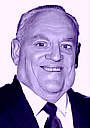
Cyril Smith MP MBE
Mayor of Rochdale
(Born 1928)
Cyril Smith was born in Rochdale on 28th June 1928. He first came
to the public's notice as the newly elected Member of Parliament
for Rochdale in the 1972 General Election, though he had already
been a major player in Rochdale politics for many years. He had
been just 22 years of age when he was first elected to the Rochdale
Council.
A lifelong member of the Liberal Party, in 1966 he was appointed
Mayor of Rochdale and was awarded the MBE in the Queen's Birthday
Honours List. In 1988 he was knighted Sir Cyril Smith and was
appointed as Deputy Lieutenant of Greater Manchester in 1991.
By now his political career was drawing to an end and in that
same year he announced his retirement as MP for Rochdale.
Sir Cyril always was a larger than life character, both in terms
of his ebullient outspoken personality and his enormous size -
he was affectionately known around the town as "Big Cyril", (though
he has by now shed much of that mighty frame).
Upon retirement he was offered a peerage, but declined a seat
in the House of Lords, regarding the honour of a knighthood as
suffiient recognition of his services to politics and his local
community. As a lifelong bachelor, he shared his home with his
mother Eva until her death in 1994.
Respected for his tireless work in the constituency and for his
support of the underdog - very much a peoples' champion. Sir Cyril
now enjoys an active life on the lecture and public speaking circuits,
which include the QE2.
Back
to Top
|
|
|
|
Books by
John Fielden
|
John
Fielden

(1784-1849)
Born
in Todmorden on the Lancashire border with Yorkshire into a family
of Quakers, John Fielden was a leading light in the reform of
conditions of child labour in the mid-19th century. As a child
he had worked a 10 hour day in one of his own father's cotton
mills, and served his apprenticeship as a young man before taking
over the business. With the help of his brothers, he turned it
into one of the biggest textile companies in Britain. From the
outset, it was clear that Fielden had a great social conscience,
and he insisted on experiencing shopfloor working conditions for
himself, was an advocate of workers' unions and set a decent minimum
wage for his workers (for that time).
He founded the Todmorden Unitarian Society, which was devoted
to social reforms - he also financed the building of the Unitarian
Chapel, the building of the Unitarian School and the setup of
the Society for the Protection of Children Employed in Cotton
Factories.
In 1831 he became Member of Parliament for Oldham and was proactive
in the promotion of childrens' working rights and in the Reform
Movement. He campaigned for shorter working days for children,
and succeeded in getting it limited to 10 hours a day by the passing
of the Ten Hours Act passed by Parliament in 1847. He died within
2 years and is buried in Todmorden cemetery.
Back
to Top
|
|
Books by
Gerald Kaufman
|
Gerald
Kaufman MP

(Born 1931)
Now
a Labour Party backbench Member of Parliament, renowned for his
outspoken and frequently passionate manner, Gerald Kaufman is
a well known MP for the Gorton Constituency in east Manchester.
He is
currently chairman of the culture media and sports select committee,
a post he has occupied since 1997, but would have been foreign
secretary to a Labour Government under Neil Kinnock's premiership,
but it was not to be, and when Kinnock's fortunes waned so did
those of Kaufman. He had been shadow foreign secretary between
1987-1992.
Before
becoming an MP in 1983, he worked as a journalist on left-wing
papers, as well as a comedy scriptwriter. He has also written
several books.
Kaufman
is a regular topic of media interest, a notoriously snappy dresser,
renowned for his shirts and ties. He has, in his time, held many
lofty and high profile posts in government and opposition including
the following:
1974-75:
Parliamentary Under-Secretary of State for the Environment
1975:
Parliamentary Under-Secretary, Department of Industry
1975-79: Minister of State, Department of Industry
1980-83: Shadow Environment Secretary
1983-87: Shadow Home Secretary 1987-92 Shadow Foreign Secretary
Back
to Top
|
|
Books by &
about Oswald Mosley
|
Sir
Oswald Mosley
Leader
of the British Fascist Party

(1896-1980)
Oswald
Mosley, founder and leader of the British Fascist Party in the
1930s, was born on November 16th 1896 and was educated at Winchester
College. His family was an old established Manchester family,
and Mosley himself was the Sixth Baronet. Mosley Street in Manchester
bears his family name. The young Oswald entered the Royal Military
College at Sandhurst and in 1914 joined the 16th (the Queens)
Lancers before going on to the Royal Flying Corps as an Observer.
He was later discharged due to leg injuries sustained in a plane
crash and by the end of the War was working in the Foreign Office.
He became a Conservative MP for the Harrow' constituency in 1918,
the youngest MP in the House of Commons. In 1924 disenchanted
with government policies, he joined the Labour and was made Chancellor
of the Duchy of Lancaster in 1928.
His
political career seemed guaranteed, and had it not been for his
extreme right wing political ideologies, he would no doubt have
risen to higher and more distinguished office. In this time of
depression and widespread unemployment, he became gradually interested
in the economic policies of the Italian dictator, Benito Mussolini,
and in 1932 published his first book, "The Greater Britain",
in which he set out his grand plan for the economic, social and
political reconstruction of Britain. He actually paid visits to
both Mussolini and the German dictator, Adolph Hitler. Hitler
in fact was Mosley's best man at his second marriage in Goebbel's
house in Berlin.
On Saturday
October 1st 1932 he founded the British Union of Fascists to implement
his policies. His early meetings were held at Hyndman Hall in
Liverpool Street, Salford. During the 1930s his policies were
increasingly controversial - his outspoken oratory and his militaristic
street parades and rallies of black-shirted neo-Nazis, reminiscent
of those taking place in Nuremberg in Germany, were frequently
accompanied by unrest and violence. Several rallies were hel;d
at Queen's Park in Harpurhey. In 1933 one of his meeting at the
Free Trade Hall was the scene of rioting, and police had to be
called to separate various factions. Apart from a faithful minority
following he failed to grab the imagination or sympathies of the
people.
In 1938
he published "Tomorrow We Live" as well as a large number
of leaflets, booklets and two regular weekly newspapers "The
Blackshirt" and "Action". His views were vehemently
pro-British, intensely xenophobic and overt in their racism.
The
Second World War and the ensuing collapse of fascism in Europe
effectively brought an end to Mosley's career as a politician,
and an effective end to the party's popularity in the western
world. He died at home in bed in 1980 aged 84.
Back
to Top
|
|
Books byJack
Straw
|
Jack
Straw MP

(born 1946)
Jack Straw was born in 1946 and educated at Brentwood School in
Essex. Later, at Leeds University, he was President of the University
Students' Union from 1967-1968 and of the National Union of Students
from 1969-1971.
A leading player in UK politics, from 1971 to 1974 he was a member
of the Inner London Education Authority as well as being Deputy
Leader of the Labour Party from 1973 to 1974. He had been called
to the Bar (Inner Temple) in 1972, and worked as a barrister from
1972-1974; he was special adviser to Barbara Castle from 1974-1975
and to Peter Shore from 1976-1977. He also worked for Granada
Television's "World in Action" programme from 1977-1979.
Jack Straw was appointed Secretary of State for Foreign and Commonwealth
Affairs on the 8th June 2001, having been the Member of Parliament
for Blackburn since 1979.
He had already been Home Secretary in Tony Blair's new Labour
Government from 1997-2001, having previously been Shadow Home
Secretary while in opposition from 1995 to 1997.
He had by then already held a variety of high offices in opposition
and was a leading member of the Blair's "New Labour" Party, including
Shadow Environment Secretary from 1992-1994, Shadow Education
Secretary between 1987 and 1992, Opposition Spokesman on Local
Government from 1983-1987, and from 1980-1983 on Treasury matters.
He was a member of the Labour Party National Executive Committee
from 1994-1995.
He is a visiting Fellow of Nuffield College Oxford and a Fellow
of the Royal Statistical Society. He is married with a son and
a daughter. He is an active supporter of Blackburn Rovers Football
Club.
Under Prime Minister Gordon Brown's premiership in 2007, Jack
Straw became Minister for Justice.
Back
to Top
|
|
Books by and
about Barbara Castle
|
Barbara
Castle MP

(1911-2001)
Born
Barbara Anne Betts in Bradford, Yorkshire on 6th October 1910,
Barbara Castle was described by ex-Labour Party Leader Michael
Foot as 'the best Socialist minister we've ever had' and was probably
best known as the outspoken campaigning Member of Parliament for
Blackburn in Lancashire for 35 years. As a young woman she is
reputed to have lived for a time in Hyde, (then in Cheshire, now
part of Tameside in Greater Manchester).
Her mother had been a local Labour Councillor and her father was
a tax inspector and political activist. A bright girl, she attended
Bradford Girls' Grammar School, and later took a degree at Oxford.
Later, she determined to be a journalist and a politician, but
the Depression forced her temporarily to seek work selling fruit
in a Manchester store. At Oxford she had also met Michael Foot
with whom she spent many hours discussing social politics at his
flat in Bloomsbury - they denied allegations and rumours of an
affair. However, in 1937, they helped launch the "Tribune",
which set out to reform the Labour Party as a truly socialist
party and in 1944 she won election to the Blackburn constituency
which she represented until her retirement in 1979.
A clever and single-minded author of some of the best political
diaries of her time, she had begun her campaigning against Fascism
in pre-World War Two days and rose to be a minister in Harold
Wilson's government in the 1960s and 70s. Wilson appointed her
to his first cabinet at the Department of Overseas Development,
in which she was to become possibly the most effective Cabinet
Minister of her generation, despite having no previous ministerial
experience. Wilson promoted her to the Department of Transport
and in two and a half years she transformed the department and
oversaw the introduction of the breathalyser and the seatbelt.
Later he promoted her again to First Secretary in the new Department
of Employment and Productivity in an attempt to bring order to
the poor state of industrial relations. "In Place of Strife"
was the white paper which she produced in an attempt to bridge
the chasm which existed between employers and workers, but this
proved disastrous and was roundly rejected. Despite its many worthy
proposals she was forced to accept a shortened bill which was
only to enforce the more penal clauses and industrial dischord
was even more deepened. The episode also accelerated alienation
between party activists and the leadership, aand although well
liked and respected by parliamentary backbenchers, she was nevertheless
a controversial figure and was fired by Labour Prime Minister,
James Callaghan.
Ultimately she left many worthy monuments to her governmental
efforts, not least of which was Equal Pay for Women. After retirement
from Westminster in 1979, she became the leader of the Labour
group in the European parliament for ten years.
Later, party leader Neil Kinnock recommended her to the House
of Lords and she was created a Baroness. She and her husband Ted,
(who had died in 1979), had no children. Barbara Castle, by then
Baroness Castle of Blackburn, died on the 3rd of May 2001.
Back
to Top
|
|