Manchester Coat of Arms

Macclesfield Canal, Manchester & Northwest England
Manchester Busy BeeMacclesfield Canal - Manchester UK Papillon Graphics
Papillon Graphics' Virtual Encyclopaedia of Greater Manchester
Including Bolton, Bury, Manchester, Oldham, Rochdale, Salford, Stockport, Tameside, Trafford & Wigan

NAVIGATION
A to Z Index of Manchester
About Papillon Graphics
Manchester  Accommodation
Advertise on the Manchester UK website
Awards we've Won
Manchester - Arts & Culture
Book a Manchester or UK Hotel Online
Manchester - Business & Finance
The County of Cheshire
Code of Ethics
Contact Papillon Graphics
Day Trips Out from Manchester
Suburban Districts and Townships of the City of Manchester
Education & Training - Schools, Colleges & Universities in Greater Manchester and the North West of England
Manchester Entertainments
Manchester Facts & Figures
Restaurants, Bars and Cafes in Manchester - Dining Out and Drinking
History and Heritage of Manchester
Holiday Hotel Deals
Industry and Manufacturing in Manchester & Lancashire

Manchester - Useful Information & Emergencies
Introducing Manchester
Manchester International Festival 2007
The County Palatine of Lancashire
Local Celebrities of Greater manchester and the Northwest region
Manchester Links
Manchester Airport

Manchester Weather Forecast
Manchester Maps and Location Plans
Meeting Places & People around Manchester - Clubs and Societies
Our Privacy Policy
Search this Website
Shopping in Manchester - Shops & Department Stores
Site Map - Alphabetical Website Contents by Subject
Sports and Leisure in Greater Manchester
The Ten Boroughs of Greater Manchester
Translate this Page
Manchester Transport
Virtual Tours of Manchester
Manchester Worship & Religion


Virtual Hosting by
The ServerBank.Com
TheServerBank

Photos by John Moss

Manchester Canals
Inland Waterways around Greater Manchester, Cheshire & Lancshire


The Macclesfield Canal

Macclesfield canal as it passes through Macclesfield
Macclesfield - showing the undulating Macclesfiled Canal
Aerial Photograph Courtesy of www.webbaviation.co.uk © 2005
CLICK ON IMAGE TO ENLARGE

The Macclesfield Canal is in many ways the entrance to the Pennine Hills and the Peak District. Approaching from the Trent & Mersey Canal, as most do, it marks the beginning of hill country, and is thought by many to be the most beautiful of Englands inland waterway navigations. A shallow canal, engineered by the great Thomas Telford, it runs for 27 miles to join the Peak Forest Canal at Marple Junction.

It was surveyed by Thomas Telford and engineered by Crosley. The canal was opened in 1831, by which time the railways had begun to impact upon transport systems, and the Macclesfield Canal Company was to remain in business for only 15 years, before being acquired by the Great Central Railway Company.

The canal is the highest point on the British Inland Waterway system, and therefore prone to extreme shallowness in dry weather, and frequent early closing of locks is common in summertime. It is beautifully maintained, with its 12 locks being grouped in one single flight at Bosley, in typical Telford style. The great stone chambers of the locks are unusual in that they have double gates at both ends of the lock - the stone was quarried locally at the Cloud, a hill which dominates the locks.

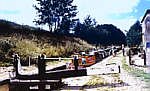
Macclesfield Canal, Hall Green Stop Lock
Hall Green Stop Lock

Bosley Locks on the Macclesfield Canal
Stone chamber on Bosley Locks

Visitor Moorings opposite the Old Hovis Mill at Macclesfield
The Old Hovis Mill at Macclesfield

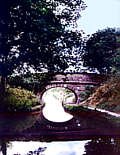
Bridge at Congleton on the Macclesfield canal
Roving stone canal bridge at Congleton

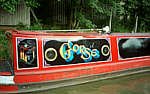
Narrowboat at Bollington Wharf
Narrowboat moored at Bollington

The southern reaches are overshadowed by Mow Cop, which marks the Staffordshire-Cheshire Border, and is topped by the ruins of a castellated ruin, known as Wilbraham's folly. On either side lie the lush green farmlands of Cheshire.

Two great houses border the canal - Little Moreton Hall, a half-timbered Tudor manor house reckoned to be the most complete in Britain, (about 1 mile off the towpath), and Ramsdell Hall built in 1760, with garden lawns sweeping down to the edge of the water. As it moves northwards, the canal passes through Congleton and on up to Macclesfield. It was Macclesfield's silk industry which played a major factor in the building of the "Macc" (as locals call it).
The canal runs high above the town of Macclesfield, and arrival is only signalled by the Macclesfield Marina overlooked by the Publicity Works Mill (the old Hovis Flour Mill), now cleaned up and converted to luxury apartments. Macclesfield has several attractions worth stopping for.

Apart from a major shopping centre, there is the Paradise Silk Mill, in Park Lane, a working exhibition of silk spinning and weaving in Macclesfield since the 18th century. It remained in business until 1981, and boasts 26 original Jacquard Looms, fully restored and in working order.

Also worth seeing is the Silk Museum at the Heritage Centre in Roe Street. This exhibition shows the development and uses of Macclsfield silk, "from knickers to parachutes", as well as housing an exhibition on the development of the Sunday School Movement.

After shaking off the town through its tree fenced industrial estate, Cheshire comes into its own, with dairy cattle grazing green fields, clean dry stone walls, and frequently quite beautiful stone bridges, also quarried from the Cloud. At Kerridge, just before Bollington, another hill dominates the landscape, this time the White Nancy, topped by a peculiar white monument, erected to commemorate the Battle of Waterloo.

Bollington boasts two other great Silk Mills at the canalside - the Adelphi Mill and the Clarence Mill, the latter now converted into light commercial and industrial units. At this point the towpath is part of the Middlewood Way, a long distance footpath up to Marple, and it is popular with walkers and cyclists alike.

Bollington is a pretty, well-to-do village with a charm and stye typical of old mill towns. As you reach the northern limit of the Macc, another great mill dominates the canal at Marple, the Goyt Mill by Bridge 3, one of the most impressive mills on the Cheshire Ring. This red brick building originally spun cotton before transporting it down the Ashton flight into Manchester and thence to the rest of the world.

odern trade economics forced this mill, like all the others on the Macc, to cease trading in the 1960s, yet it has, like the others, rediscovered new uses for its old structure, and new shops, a climbing centre, snooker hall, signwriters, a cafe and Peak Gas, have found new residence within its splendour. Arrival at Marple is somewhat of a canal climax.

The Marple basin is a beautifully preserved and photogenic piece of industrial heritage, still housing the British Waterways Office and the original tally office beside the Top Lock - it is well maintained and a mecca for "gongoozlers" (canal boat watchers). It is a popular place for overnight mooring, prior to travelling to Whaley Bridge, or down the Marple flight to Portland Basin.
See also:

Inland Waterways Association - Manchester Canals at www.waterways.org.uk/branch_new/manchester


Back to top
< Back to Canals Menu/Cheshire Ring


Google


Papillon Graphics Animated GIF Logo
Copyright © John Moss, Papillon (Manchester UK) Limited 2000-2008 AD Salford, Greater Manchester, United Kingdom - all rights reserved. This page last updated 3 June 05.