NAVIGATION









































Virtual
Hosting by

TheServerBank
Drawings
by John Moss
|
 |
 |
Manchester
Celebrities
Authors, Novelists, Writers &
Poets (4)
|
|
Books by
Francis Thompson
|
Francis Thompson

(1859-1907)
Francis Thompson was born in Preston in 1864 but moved to live
with his family in Ashton-under-Lyne in 1864. Raised as a Roman
Catholic and educated at home, in 1870 he went into Ushaw College
to train for the priesthood. However, his tutors found him to
be temperamentally unsuited and he left to study for a degree
in Medicine in Manchester's Owens College (later to become the
University of Manchester). In the event, he did not complete the
course and was thrown out by his father.
He then moved to live in London where he would probably have ended
his short life as a drug addict were it not for the intervention
of Wilfred and Alice Meynall, publishers of the Merrie England
magazine, who, recognising the quality of his writings, took him
in, nursed him back to health and became his major promoters and
benefactors throughout the remainder of his life.
Thompson went on to write many poems and was at his most prolific
between 1888 and 1897, including his best known "The Hound
of Heaven". Other works include "Poems"
in 1893, "Sister Songs" in 1895, as well as his
"Essay on Shelley" and "Life of Saint
Ignatius Loyola", both published after his death in 1909.
Thompson also contributed to magazines like the Athenaeum
and the Academy.
Back
to Top
|
|
|
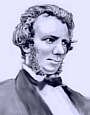
John Critchley
Prince
Books by Critchley
Prince
|
John Critchley
Prince
(1808-1866)
John Critchley Prince was born in Wigan in 1808 but moved to live
in Hyde for a number of years after marrying local girl in that
township. Prince had little formal education - only that gained
at the local Baptist Sunday School.
By the age of nine he worked in a local cotton mill. Married young,
he was the father of three children by the age of 21. However,
employment prospects were tenuous at best and by 1830, unemployed,
he was forced to leave and seek work in Europe. Conditions were
no better there and he walked home in 1831, destitute and virtually
starving.
Worse was to greet his return as his wife and children were by
then in a Wigan poor house. Prince moved around Lancashire following
any casual work opportunity that presented itself - in Blackburn,
Ashton and Hyde. Despite these troubled times, he continued to
write poems in the Lancashire dialect, including "Hours
With the Muses" in 1840, "Dreams and Realities"
in 1847, "The Poetic Rosary" in 1850, "Autumn
Leaves" in 1856 and "Miscellaneous Poems"
in 1861.
John Critchley
Prince died in Hyde in 1866.
Back
to Top
|
|
|

Samuel Hill
|
Samuel Hill
(1864-1909)
Sam Hill was born in King Street in Stalybridge in 1864, the son
of a local blacksmith. At the age of fourteen he was apprenticed
at Taylor Lang and Company as a machine joiner. During this time
he found an interest in painting and drawing, and took lessons
from Joseph Taylor, a friend of the family.
From 1885 he worked in a number of local mills in Dukinfield,
Stalybridge and Guide Bridge.
In 1886, his father suffered a serious accident and Sam took over
his business. However the increased use of machine-made goods
meant that his father's trade was in serious decline and Sam was
forced to return to his own trade. In 1892 he moved to work as
a stage manager and carpenter in Macclesfield. He remained in
this employment for many years, and wrote poems in his spare time,
most of which were in the Lancashire dialect. In 1906 he moved
back to live in Stalybridge and published many poems in the Ashton
Reporter and the Stalybridge Herald, including "Aleheause
Signs", "Old Lancashire Songs and Their Singers",
"Lancashire Poets and Their Poems", "Foirewood,
or Splinters an' Shavin's fro' a Carpenter's Bench",
and "Little Spadger's Dog" in 1906. His last
poem, "Byegone Stalybridge", a history of the
town was published in 1907, shortly before his death in 1909.
Back
to Top
|
|
Books by
Samuel Laycock
|
Samuel Laycock
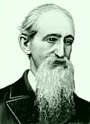
(1826-1893)
Born in Marsden near Saddleworth (then in the County of Yorkshire)
in 1826, Sam Laycock was to become one of Lancashire's most famous
dialect poets despite little or no formal education.
He began his working life at the age of nine working in Robert
Bowers Woollen Mill in Marsden. In 1837 his family moved to live
in Stalybridge and it was with this township that he was to be
associated for the rest of his life. Here he became a powerloom
weaver in Leech's Mill and was to meet and marry Martha Broadbent.
Martha died in 1852 and in 1858 Laycock was remarried to Hannah
Woolley.
Between 1855 and 1867 Laycock was to write most of his best known
poetry including "Bowton's Yard", "Bonny Brid",
"Lancashire Lyrics" and his first published work,
"A Little Bit on Both Sides" in 1855
Laid off work during the Cotton Famine of 1861-1865, it prompted
his twelve "Lancashire Lyrics" and after this
time he was never to work in a mill again. Much of this work described
in local dialect verse the conditions and disastrous effects that
such widespread unemployment had on the local districts of Stalybridge,
Ashton and Dukinfield - areas almost totally dependent upon the
textile trades for their livelihood. He followed this publication
with "Lancashire Rhymes" in 1864 and "Lancashire
Songs" in 1866. His works were immensely popular among
working people who readily identified with his sentiments - many
poems were set to music and became popular songs. Laycock's work
also constitutes a valuable record of working peoples' experiences
at the time.
In 1865 Laycock became librarian and caretaker at Stalybridge
Mechanics Institute as well as being a member of the Manchester
Literary Club.
Poverty and depression continued and Laycock was forced to seek
employment outside the area and moved to Fleetwood where he worked
as curator at the Whitworth Institute. He was elected to Blackpool
Library Committee, and wrote several other notable poems, including
"Lancashire Poems, Tales and Recitations" in
1875 and "Warblin's From' An Owd Songster" in
1893. He died on 15th December of that year and is buried in Blackpool
cemetery.
Back
to Top
|
| |
Edwin Waugh
(1817-1890)
Born the son of a shoemaker in Rochdale in 1817, Edwin Waugh was
perhaps one of the most successful of the Lancashire dialect poets.
His childhood was desperately impoverished and at the age of ten
he was employed by a local bookseller, Thomas Holden. It was here
that Waugh, surrounded by books, gradually educated himself. By
1847 he had become assistant secretary to the Lancashire Public
Schools Association and moved to live in Manchester. He wrote
highly sentimental poetry, at that time in standard English, including
"Sketches of Lancashire Life and Localities",
his first book.
It was in 1856 that his first dialect poetry appeared, including
his most famous, "Come Whoam to thi' Childer an' Me".
On the success of these works he was able to devote himself full
time to writing. Socially aware and deeply conscientious, Waugh
felt compelled to also write on serious matters and made many
reports and essays on social and economic issues affecting Lancashire
working people and their poverty, particularly during the Cotton
Famine of 1861-1865.
Waugh died at New Brighton in 1890 and is buried at Kersal.
Back
to Top
|
|
Books by
Terry Eagleton
|
Terry
Eagleton
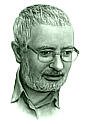
(Born 1943)
Writer, academic and novellist, Terry Eagleton was born into a
working class family in Salford in 1943 and reputedly began writing
short stories by the age of six. He went to school at De La Salle
College and became interested in drama. After reading English
at Trinity College, Cambridge, he achieved a First Class Degree
with special distinction in 1964, and was awarded a PhD in 1967.
Later, he became a research fellow at Jesus College. In 1969 he
moved as a lecturer to Wadham College, Oxford where he was eventually
to become Thomas Warton Professor of English Literature.
His several books on literary criticism include "Literary
Theory - an Introduction" in 1983, "Heathcliffe
and the Great Hunger" (1995), "After Theory"
(2005). Other work includes "The English Novel: an Introduction",
"The Significance of Theory" (1990), the novels
"Saints & Scholars" (1987) and "The
Gatekeeper" (2001), as well as several plays.
Regarded as a leading intellectual and British Marxist literary
critic, he lives with his wife and their son in Londonderry and
is currently Professor of Cultural Theory and John Rylands Fellow
at the University of Manchester.
Back
to Top
|
|
Books by
Sir Arthur Conan Doyle
|
Sir Arthur
Conan Doyle
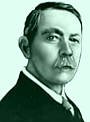
(1859-1930)
Born Arthur Ignatius Doyle on 22 May 1859 in Edinburgh into a
prosperous Irish Catholic family, the world-famous author of the
Sherlock Holmes books, from the age of eight Sir Arthur Conan
Doyle attended Stonyhurst College, the Jesuit boarding school
at Hurst Green in Lancashire. It was here that he set one of his
most famous stories "The Hound of the Baskervilles".
A little known fact is that he played in the position of goalkeeper
for Portsmouth Football Club (under a pseudonym).
At the age of seventeen, in 1876, Arthur Doyle graduated and was
intending on a career in medicine. However, as a young medical
student he came into contact with several future authors, including
James Barrie and Robert Louis Stevenson, and they seem to have
had a profound influence upon him.
His first known story "The Mystery of Sasassa Valley"
was published in Chambers Journal, an Edinburgh magazine,
followed by "The American Tales" published in
London Society Magazine. He briefly worked as a medical officer
on the steamer Mayumba, an old ship that travelled between
Liverpool and West Africa, but he soon grew tired of this and
determined to set up his own medical practice in Portsmouth.
The years following saw him juggling the life as a doctor with
his aspirations at authorship, with some degree of success. But
it was the Sherlock Holmes character and the series of books that
centred around him that caught public attention and for which
he remains best known. Others flowed with equal success, including
"The Sign of Four".
Later he moved to a practice in Wimpole Street in London. He made
lecture tours of many countries, including the USA where he spoke
in more than 30 cities to packed houses. With the outbreak of
the Boer War, and now too old to enlist, Conan Doyle volunteered
as a medic and left for Africa in February 1900.
On the death of his wife he moved with his daughters to live in
Windlesham, in Sussex, where he remarried and remained for the
rest of his life. In later life, having killed off Sherlock Holmes
in the last of the series, "The Final Problem",
he wrote several science fiction stories, including "The
Lost World", and delved into spiritualism. He became
increasingly preoccupied with the occult, to the detriment of
his writing, and his later books all concerned the world of the
psychic and the paranormal. In 1929, after an exhaustive tour
of Holland and the Scandinavian countries he returned an ill and
broken man and died on Monday 7th July 1930, surrounded by his
family.
Back
to Top
|
|
|
|
|
|
|