NAVIGATION









































Virtual
Hosting by

TheServerBank
Drawings
by John Moss
|
 |
 |
Manchester
Celebrities
Authors, Novelists, Writers & Poets (3)
|
|
Books by
Howard Spring
|
Howard
Spring
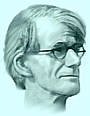
(b?- d.1965)
Cardiff born Howard Spring was the journalist, author and novelist
who made Manchester his adopted home. He spent much of his life
at Hesketh Avenue in Didsbury, where the Olde Cock Inn was to
feature in several of his novels. His works were to include "Shabby
Tiger", "Rachel Rosling" and "My Son, My Son". Spring
was one of nine children born into the family of an odd job gardener.
Showing early aptitude in writing, young Howard left school to
become a butcher's boy at the age of 12, and later was office
boy and then a junior reporter on a South Wales newspaper. In
1915 he moved to Yorkshire to become a staff reporter on the Yorkshire
Observer, and quickly moved to work at the Manchester Guardian
(now simply The Guardian). After seeing military service, he worked
for 15 years at the Guardian as a book reviewer and theatre critic.
Later he moved to work at the London Evening Standard, from where,
after 10 years he retired to Cornwall, where he died in 1965.
His last years were spent writing novels, including perhaps his
best known "My Son, My Son", the manuscript of which was
donated by his widow to the John Rylands Library in Manchester.
Back
to Top
|
|
|
|
Books by
Neville Cardus
|
Sir
Neville Cardus

Neville Cardus,
journalist and author, was born in Summer Place, Rusholme, and
had very little in the way of a formal education. He was largely
self taught by long hours in the Free Library, and eventually
became a celebrated writer on Cricket and Music, both subjects
close to his heart. As a young man he had a variety of dead-end
jobs, including delivering laundry and as a junior in a Manchester
insurance office. By the age of 23 he had risen to the position
of cricket coach at Shrewsbury School. Eventually he returned
to his native Manchester and became secretary to C. P. Scott,
editor of the Manchester Guardian. By 1926 he had been promoted
to the post of Music Critic for the celebrated newspaper. After
a few years living and working in Australia (1939-1947 - for health
reasons), he returned to work at the Guardian and continued writing
critiques on cricket and music, and was a celebrated supporter
of the Hallé Orchestra. In 1967 he was knighted for his work.
In 1970-71 he was president of Lancashire Cricket Club.
Back
to Top
|
|
|
|
Books by
Robert Bolt
|
Robert
Bolt
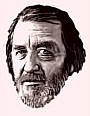
(1924-95)
Robert Oxton Bolt, the famous playwright, author and screenwriter,
was born in 1924 at 13 Northenden Road, Sale, and lived there,
above his father's furnisher's shop until around 1928, when the
family moved to live at 68 School Road. A commemorative plaque
was placed on these premises in June 2000.
An English dramatist and screenwriter. He wrote several historical
plays, including "A Man for All Seasons" in 1960,
widely considered to be his most important play, which was made
into a film in 1966. He also did many screenplays including for
David Lean's film of "Lawrence of Arabia" in 1962, and
"Dr Zhivago" in 1965, both of which won Academy Awards.
In 1970 he wrote the screenplay for "Ryan's Daughter ",
and for "Lady Caroline Lamb" in 1972, which starred his
wife, Sarah Miles, in the title role - he also directed this film.
Later, in 1984 he wrote screenplays for the remake of "The
Bounty" which starred Mel Gibson, and in 1986, "The Mission"
starring Robert de Niro and Jeremy Irons.
Bolt demonstrated outstanding skill in the dramatisation of political
and moral issues, and was an expert in the use of dramatic structure,
strong characterisation, and expressive dialogue. This was demonstrated
further in "Vivat Vivat Regina" in 1970, which well illustrated
his ability to bring history to life. His "Revolution" in
1977, though not a popular success, showed his ability to tackle
intellectually ambitious topics and to deal with them authoritatively.
Back
to Top
|
|
Books by
Alan Garner
|
Alan
Garner OBE

(Born 1934)
Alan Garner was born in Congleton in Cheshire on 17 October 1934,
and spent most of his childhood days in Alderley Edge. During
childhood he suffered from both pneumonia and meningitis.
He went to school at Alderley Edge Primary School and later studied
at Manchester Grammar School before going on to Magdalen College,
Oxford where he gained a degree in classics and met the authors
Tolkien and C S Lewis.
Later under National Service conscription, he spent two years
in the Royal Artillery as a Second Lieutenant, and by the age
of 22 he had begun to write his first novel, "The Weirdstone
of Brisingamen". He worked for a time as a researcher
at Granada Television.
His children's books are much influenced by local Cheshire dialect,
legend and and myth.
In 1968 he won both the Guardian Award and the Carnegie Medal
(1968), for "The Owl Service" (published 1967)
- the first author to win both awards for a book. His novel "Elidor"
had already been a 1965 runner-up for the Carnegie medal.
He also won the Phoenix Award in 1996 for "The Stone Book
Quartet" which had been published in 1977. Other awards
include the Lewis Carroll Shelf Award, and First Prize at the
Chicago International Film Festival for his film "Images".
Garner was awarded an OBE in 2001 for his services to literature.
Alan Garner continues to live in Cheshire and is married with
five children from his two marriages.
Back
to Top
|
|
Books by
James Hilton
|
James Hilton
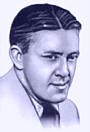
(1900 -
1954)
Also known as Glen Trevor, author James Hilton was born in 26
Twist Lane, off Wilkinson Street in Leigh, now in the Metropolitan
Borough of Wigan, in 1900, the son of a local schoolmaster. The
family moved to live in London while James was still a young boy
and he attended various schools before finishing at The Leys School
in Cambridge. He edited and contributed to the school magazine
and later, while a seventeen year old undergraduate at Christ's
College Cambridge, had one of his essays published by the Manchester
Guardian. He left university in 1921 and secured a job with
The Irish Independent, a Dublin newspaper which helped
finance his writing.
His first novel 'Catherine' was published in 1920. Hilton
was to become the author of two very famous classic novels, in
a prolific and distinguished writing career, later adapted as
films: "Goodbye Mr Chips" (which starred Robert
Donat) and "Lost Horizons", both of which were
to become successful films in their own right, the latter directed
by Frank Capra in 1937. 'Lost Horizons' had been written
as a result of his visit in 1931 to a remote valley in North Pakistan,
on its border with China, Afghanistan and Kashmir. He found a
place so beautiful, so wild and so remote he christened it "Shangri-La",
(meaning "an earthly paradise"). The book was awarded
the Hawthornden Prize in 1934.
Hilton went on to win an Academy Award for his screenplay for
"Mrs Miniver", which starred Greer Garson.
Other award winning films based on his novels included 'Half
a Sixpence' (later made into a musical starring Tommy Steele)
and 'Random Harvest'. By this time a successful author,
script and screen writer, he had moved to live in Hollywood in
California. Sadly, his first marriage ended in divorce in 1937
and only seven days later he married Galina Kopineck, a young
starlet. This marriage proved volatile and Hilton again divorced
eight years later.
On 20th December 1954 Hilton died in hospital in Long Beach, California
of liver cancer. By this time his first wife, Alice, had been
reconciled with him and nursed him till the end.
In 2000 a plaque commemorating the centenary of his birth was
installed in Leigh Town Hall.
Back
to Top
|
|
|
|
|
|
|