NAVIGATION









































Virtual
Hosting by

TheServerBank
Drawings
by John Moss


|
 |
 |
Manchester
Popular & Rock Music (6 of 11)
Around Manchester and the Northwest
Region
|
|

Elkie Brooks
|
Elkie
Brooks
(b. 1946)
Elkie Brooks, who was born Elaine Bookbinder, on 26 February 1946,
a bakery owner's daughter from Cavendish Road, Salford, was almost
certain to follow many of her family members into show business
- Tony Mansfield, her brother, was leader of the then well-known
group, "The Dakotas"; another brother had a quartet; her uncle,
Nat Bookbinder was a bandleader in Manchester, and uncles Brian
and Alan were in the pop music business as a group called "The
Chapters".
She adopted the stage name "Elkie Brooks" in the 1960s to make
her way as a singer of jazz and rhythm and blues music around
the North West of England, eventually joining Robert Palmer in
the Vinegar Joe group in the 1970s. Though much acclaimed, the
group failed to grab headlines, and as a result Elkie went on
to release her own solo debut album 'Rich Man's Woman',
quickly followed up by 'Two Days Away'. One song from this
album, 'Pearl's A Singer', became probably her best known
song. From this point she never looked back.
She began to develop an almost cult following, and though rarely
in top listings during the 80s and 90s, she maintained a respected
position and devoted fan club, which has persisted till today
when she performs mostly live shows in clubs around the country,
with occasional big tour venues at National Concert Hall level,.
Some of her other best music includes: ·
- 'Only Love
Can Break Your Heart' ·
- 'The Runaway'
·
- 'Fool
If You Think It's Over' ·
- Lilac Wine'
·
- 'Love
Potion No.9' ·
- 'He's
a Rebel' ·
- 'No More
the Fool'
Back
to Top
|
|
|

Barry Gibb
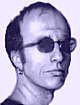
Robin Gibb

Maurice Gibb
|
Bee
Gees
Jointly known
as the Bee Gees, Barry, Maurice, and Robin Gibb's career began
when the three gathered in a bedroom in their home in Manchester,
working out the natural harmonies that were to become one of the
distinguishing features of the Bee Gees' sound. Their talents
were not exactly unexpected - their father, Hugh Gibb, was a Manchester
bandleader in his own right, and their mother Barbara had been
a former professional singer, so that music was already in the
blood.
So aged 6 to 9 years they began performing as "The Rattlesnakes"
in local cinemas between films. In 1958, the family moved to Australia
in pursuit of a warmer climate, and settled in Brisbane where
the brothers Gibb continued singing and song writing, performing
at local racetracks, and on radio and television. In March 1960,
they were given their own half-hour weekly television show in
Brisbane (Barry was only 13, and the twins were 10).
It was at this time that the Brothers became first the BG's (for
Brothers Gibb), and soon after the "Bee Gees". In 1963, they signed
a recording contract with Festival Records in Australia, and released
their first Bee Gees' single, "Three Kisses of Love". They
were a virtual instant success and much in demand to perform at
concerts, on radio and television, releasing many records, and
making several abortive attempts at break-ups and solo careers.
Inevitably, they came back to each other, and seemed better as
a group than as soloists.
It was in the early 1970s, probably as a result of working with
Arif Mardin, that the group changed direction and had instant
success with "Mr Natural" and perhaps their best remembered
song, "Jive Talkin". "Saturday Night Fever"
which became the biggest selling film soundtrack of all time,
really came as a result of the success of "Jive Talkin"
and threw them into the forefront of the world arena. They were
now the highest paid musicians in the world, a position they held
through the 1980s.
By the 1990s, however, their style had changed little and fallen
out of favour. It was then that their attentions turned to song
writing for other well known performers, among them included best-selling
albums for Barbara Streisand, Dionne Warwick, Kenny Rogers and
Diana Ross. It was in the 1990s that Las Vegas welcomed the Bee
Gees, and they have had a successful live stage career there ever
since that time.
In 1997 they had a major American concert, "One Night Only",
filmed as a world-wide television spectacular and released as
a live CD, home video, and DVD.
Also in 1997, the Bee Gees were inducted into the Rock & Roll
Hall of Fame and received Lifetime Achievement Awards from The
American Music Award, Brit Awards, German Bambi Awards, Australian
Record Industry, and World Music Awards. They continue to perform
in Las Vegas today. Maurice Gibb tragically died in LA in 2002.
Back
to Top
|
|
|
|
|
Take
That & Robbie Williams
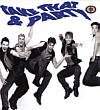 Take
That
Take
That |

Robbie Williams |
The "Brit
Pop" rave of the early 1990s, this talented Manchester-based vocal
group restored the ballad to the popular music charts. In some
ways reviving the youth adulation which the Beatles received during
the 1960s, Take That became the role models for many young people.
Their clean cut wholesome music and image, complemented by slickly
choreographed on-stage dance performances was a winning combination.
Despite not actually playing any musical instruments, they topped
the music charts for several years.
However, by the end of 1995 Robbie decided to leave and make a
solo career, amid a great deal of acrimony, and in April 1996
the group made their last performance and split up.
When Robbie Williams (who was actually from Stoke-on-Trent), ended
his association with Take That, effectively signing a death warrant
to the group, he also took what amounted to a big personal risk
into possible oblivion himself. Other ex-members of the group
fared less well, including Gary
Barlow. However, he has proved to be a supreme pop performer
in his own right and confounded all the critics, with hit after
hit.
This success has not come easily and at times has seemed rather
tenuous, with forays into drink, drugs, and promiscuity all highlighted
loudly in tabloid newspaper headlines. However, musically there
have been very few setbacks. 'Freedom', his first solo
single sold more than a quarter of a million copies, and later
in 1997, his debut solo album, 'Life thru a Lens' was received
with tumultuous acclaim by music critics, and is approaching quadruple
platinum status at the time of writing, thanks largely to the
popularity of the track, 'Angels'.
The 1999 song, 'Let Me Entertain You' was very popular
with record buyers, and has virtually become his personal anthem,
earning large volumes of record sales, has received much critical
acclaim, and attracted a number of awards. Despite prophets of
doom, his career promises to continue to prosper, and he has won
many awards for his music over the past few years, having established
himself firmly at the top of the so-called Brit Pop music scene.
In recent times, Take That have reformed, reached number 1 position
in the music charts again and seem to have regained their fan
base.
Back
to Top
|

Sean Ryder
|
Happy
Mondays
A group of
6 musicians whose debut album should have been in the Guiness
Book of Records on account of its title alone : "Happy Mondays'
Squirrel and G-Man Twenty Four Hour Party People Plastic Face
Carnt Smile (White Out)". The original group included Sean Ryder
(vocals), Paul Ryder (his brother - bass), Mark Day (guitar),
Gary Whelan (Drums), Paul Davis (keyboards), and Mark Berry (percussion)
- later they were joined by the black singer, Rowetta). Their
music featured strong dance rhythms and by 1990 they had reached
the UK's Top Ten, when "Pills 'N' Thrills And Bellyaches" reached
number 1 and established them as a major British band, hailing
from Manchester. A great deal of backing from Factory Records
combined with a consistently good output of music has kept the
Happy Mondays in the forefront of British popular music. Other
music includes :
Back
to Top
|

Peter Noone
|
Herman's
Hermits & Peter Noone
This British
band formed in 1963 and included Manchester-born Peter Noone (lead
vocals), Keith Hopwood (guitar), Derek Leckenby (guitar), Karl
Green (bass), and Barry Whitwarm (drums). Noone came to the forefront
with his boyish looks and toothy smile, when producer Micky Most
saw him acting a cameo role in Granada Television's "Coronation
Street". Working under the new name of "Herman", Noone became
the face of 1964, and the group's musical offerings were to finally
achieve 13 No.1 hits in America, as well as innumerable hits in
the UK. Most of their records used session musicians, and Noone
was promoted as a star in his own right. Despite much adulation
in the USA for their clean cut image, they fared less well in
Britain, and by 1970, Noone went solo under his own name, and
the band effectively broke up. Music included :
- Mrs Brown
You've Got a Lovely Daughter
- I'm Henry
the Eighth I am
- I'm Into
Something Good
- There's
a Kind of Hush
- Oh You
Pretty Thing (Noone solo)
|
|