NAVIGATION









































Virtual
Hosting by

TheServerBank
Drawings
by John Moss



|
 |
 |
Manchester
Celebrities
Classical Music, Theatre & Performance (4)
|
|
Books &
Music by Sir Thomas Beecham
|
Sir
Thomas Beecham
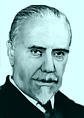
(1879-1961)
One
time resident of Wigan, Thomas Beecham was born on 29 April 1879,
the grandson of the founder of the famous "Beecham's Pills"
company. It was this successful business that helped finance his
spending on the development of symphonic and operatic music in
England and made him a great entrepreneur and promoter of music.
Beecham made his debut as a conductor in London in 1905 and within
a year he had began a series of concerts with his own New Symphony
Orchestra; he went on in 1909 to form the Beecham Symphony Orchestra.
Financing
operatic presentations from his own personal fortune, he produced
operas at Covent Garden in 1910 and others later at Drury Lane.
He was particularly fond of the lesser-known operas of Richard
Strauss, Frederick Delius, and various Russian composers, and
actively promoted their introduction into the English opera repertoire.
In particular he was instrumental in bringing Diaghilev's Ballets
Russes to London in 1911. His continued musical work resulted
in his being knighted in 1916.
Beecham conducted
with various orchestras throughout the 1920s and in 1932 he founded
the London Philharmonic Orchestra, with which he had a long association.
During that year he also became artistic director of the British
National Opera Company at Covent Garden.
World War
II saw him travelling and conducting in many foreign countries
including Australia and the United States of America, where he
conducted the Seattle Symphony and the Metropolitan Opera in New
York City. In 1946 he founded the Royal Philharmonic Orchestra
in London and continued to conduct it until 1960. Beecham also
frequently acted as guest conductor at the Halle Orchestra in
Manchester.
Beecham was
admired generally for the wit, energy and elegance of his interpretations,
and was a strong and outspoken advocate for the maintenance of
high standards in music. He was created a Companion of Honour
in 1957. Thomas Beecham died on 8th March 1961.
Back
to Top
|
 |
| |
Michael
Ball
(Born 1946)
Classical music composer Michael Ball, (not to be confused with
the popular music singer of the same name), was born in Manchester
in 1946. His skills emerged early and he studied at the Royal
College of Music, where he studied with Herbert Howells, Humphrey
Searle and John Lambert. He received many honours and scholarships,
including the Octavia Travelling Scholarship in 1970, which he
used to study with Franco Donatoni in Italy.
He has received many commissions, including five from the BBC
over the last ten years, and has written several large-scale works
for orchestra. Both "Resurrection Symphonies"
(1982) and "Danses Vitales: Danses Macabres" (1987)
were first performed by the BBC Philharmonic Orchestra.
He has also worked on commissions at the Royal
Northern College of Music, Manchester in 1986, worked with
Stockport School Wind Band, with Besses o' th' Barn Band in 1991,
and with the Black Dyke Band in 1997, as part of the BBC 'Music
Live!' Festival.
Important choral works by this composer include Sainte "Marye
Virgine" in1979, "A Hymne to God my God"
in 1984, and "Nocturns" in 1990.
Michael has also written several pieces for younger musicians,
including his opera "The Belly Bag", to a libretto
by Alan Garner.
He has also made successful forays into more popular music with
a string of albums released consistently over the years, and has
made many television guest appearances.
Michael Ball lives in Ireland with his wife Miriam and young son,
Alexander.
Back
to Top
|
|
Maurice Johnstone
(1900-1976)
Composer Maurice Johnstone, born in Manchester in 1900, is perhaps
one of the north west's lesser known musical talents, who and
spent the greater part of his life working in the region. He studied
at the Royal Manchester College of Music (now the Royal
Northern College of Music).
As a young man he worked for a time in the retail trade and later
as a journalist. In 1932 he was employed as a secretary to Sir
Thomas Beecham, (see above) with whom he worked for three years
resulting in an association, through Beecham with the London Philharmonic
Orchestra and Johnstone did much of the preparation and marking
of scores for him. He also composed several musical pieces including
"The Tempest", the "Anthem for Brass",
"Cumbrian Rhapsody", "Tarn How", "Dover
Beach, "Welsh Rhapsody" and an overture entitled
"Sea Dogs", amongst others. He also wrote many
stirring marches including "Pennine Way", "Watling
Street" , "County Palatine" and "Beaufighters".
His song compositions included "At Night", "Hush"
and "So Are You To My Thoughts".
After 1935 he worked in the Music Department of the BBC in London,
before moving in 1938 to become Head of the BBC North Region's
Music in Manchester, a position he held until 1953. During these
years he was associated with the newly formed the BBC Philharmonic
Orchestra. On the basis of this excellent reputation, he was recalled
to London in 1953 to become Head of Music Sound Programmes, a
position he held until his retirement in1960. Maurice Johnstone
died in 1976 at Harpenden.
Back
to Top
|
|
Music of Josef
Locke
|
Josef Locke

(1917-1999)
Josef Locke,
the celebrated Irish tenor spent much of his life living in Lytham
St Annes. He was born Joseph McLaughlin, on 23rd March 1917 in
Derry, Northern Ireland, the son of a butcher and cattle dealer,
and one of nine children.
As a 7 year
old he sang in local churches in the Bogside, and lied about his
age in order to enlist in the Irish Guards. Later he served as
a policeman in Palestine before returning to Ireland in the late
1930s to join the Royal Ulster Constabulary.
Nicknamed
'The Singing Bobby' in the 1940s he had became somewhat
of a local celebrity. Later while working in Blackpool, he met
the renowned tenor, John McCormack, who advised him on a suitable
repertoire, and helped him find a theatrical agent.
Subsequently,
Locke signed up with band-leader and impresario, Jack Hylton,
who booked him into the Victoria Palace, under the stage name
of Josef Locke, a professional name which he retained throughout
his professional career. Later, he was signed up by Lew and Leslie
Grade.
He made his first radio broadcast in 1949 on the popular 'Happydrome'
programme, and subsequently appeared on TV programmes such as
'Rooftop Rendezvous', 'Top of the Town', All-Star Bill'
and 'The Frankie Howlerd Show'.
In 1947 EMI
Records signed him to their Columbia label and his first record
was of two Italian songs, 'Santa Lucia' and 'Come back
to Sorrento'.
Also in 1947
he released 'Hear my song, Violetta' which became his signature
tune. His other songs, many of a decidedly Irish flavour, included
'I'll take you home again Kathleen', 'Dear Old Donnegal' and
'Galway Bay', 'The Drinking song', 'My Heart and I',
'Goodbye', 'Come back to Sorrento' and 'Cara Mia'.
Josef Locke
made several films, including 'Holidays with Pay' for Mancunian
films and sang at five Royal Command Performances, before he left
the country for County Kildare in 1958, after a prolonged battle
with the Inland revenue. He made frequent return trips for charity
events and birthday tributes.
He was also
the subject of a 'This is Your Life' programme.
His music is frequently re-issued as compilatios and his music
is regularly revived by popular demand.
Josef Locke
died on Friday 15th October 1999.
Back
to Top
|
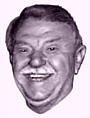 |
Ronnie
Hazlehurst
(1928-2007)
Composer and musical arranger Ronnie Hazlehurst was born in 1928
in Dukinfield, Cheshire - now in the Borough of Tameside in Greater
Manchester. At first, he tried to make his living as a trumpet
player, and after some session work for the BBC, he joined the
corporation in London in 1961 as an arranger and conductor, eventually
becoming Director of Light Entertainment Music.
During the
1960s and 70s, Hazlehurst composed or arranged the theme tunes
to very many of the BBC's light entertainment shows, including
such hits as 'Blankety Blank', 'The Two Ronnies', 'Yes, Minister',
'Some Mothers Do 'Ave 'Em' and 'Are You Being Served?'.
But he is probably best known as the composer of the theme tune
to the ever-popular "Last of the Summer Wine"
comedy series.
Ronnie was
also the musical director of the Eurovision Song Contest in 1974,
1977 and 1982, and famously conducted the UK entry in 1977 using
a rolled-up umbrella!
At the BBC
he created incidental music for 'The Likely Lads' and 'The
Liver Birds', and a tune for 'It's a Knockout'. He
often worked for small fees, but greater responsibility eventually
arrived in 1971 when he took charge of the orchestra for the then
top-billing 'The Two Ronnies' shows. He went on
over the next 15 years to compose theme music for many other hit
shows, including 'Three Up, Two Down', 'To the Manor Born'
and 'The Rise and Fall of Reginald Perrin'.
In 1997 he
moved from his home in Hendon to live in the island of Guernsey
and in 1999 Hazlehurst received a gold badge award from the British
Academy of Composers and Songwriters.
Ronnie died
peacefully on Tuesday 2nd October 2007 at the age of 79 at the
Princess Elizabeth Hospital in Guernsey, where he had been admitted
a week earlier suffering a stroke. He is survived by his partner,
Jean Fitzgerald, and by two sons from his second marriage.
|
|
Music on CD
& DVD: Henry Hall
|
Henry
Hall CBE
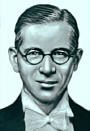
(1898-1989)
Legendary
dance band leader and broadcaster Henry Hall was born on the 2nd
May 1898 in Peckham, London and had a long association with Manchester.
He was one of the most popular radio personalities of the 1930's
and 40's big dance band era, in the days before television. His
family were keen members of the Salvation Army and Henry was encouraged
to play the cornet in the band as well having piano lessons. After
leaving school he worked for a time in the Salvation Army's Music
Editorial Department.
In 1916 he
joined the Royal Field Artillery but his musical talent was soon
recognised and was transferred to the Cadet School where he played
the piano as a member of the band and wrote arrangements for revues.
After he was demobbed he looked for employment in the music industry,
and worked for a time as a cinema pianist to finance his studies
at the Guildhall School of Music.
In 1922 he
moved to Manchester to work as relief pianist in a dance band
and was soon leader of the Trafford Band at the Midland
Hotel, one of the old LMS Railway chain of hotels. In this
capacity he advised on music at the new LMS Gleneagles Hotel in
Scotland and arranged a radio broadcast to advertise the hotel's
opening. Thus Scotland's first ever outside broadcast took place
on 4th June 1924, and it was probably then that the talents of
Henry Hall first came to the attention of the BBC.
Afterwards,
the band moved to the Adelphi Hotel in Liverpool from whence they
were offered a contract by Columbia Records. Most of the band's
subsequent recordings were actually made in Manchester though
the band continued to be known as 'The Gleneagles Dance Band'.
By 1932 Hall
was running 32 bands in all for LMS, and it was inevitable that
his rising notoriety should attract the attention of the BBC,
who invited him to lead the BBC Dance Orchestra. He soon established
a distinctive and individual musical style and his opening announcement
of "...this is Henry Hall speaking" became somewhat
of a radio institution. Such was the popularity of his radio orchestra
that in 1934 the BBC launched 'Henry Hall's Guest Night',
which ran for almost 1000 broadcasts. His arrangements of ballroom
and jazz music endeared him to the nation and he became probably
the most celebrated broadcast band leader of his day.
In 1936 Hall
was invited by Cunard to form and conduct a band for the maiden
voyage of The Queen Mary; it first sailed on May 27th,
and as part of the publicity, Hall wrote a special song for the
trip 'Somewhere At Sea'.
Henry Hall
and his Orchestra continued to record and tour throughout Great
Britain and Europe until their last performance in 1947. Later
he moved into theatrical management, producing several hit West
End shows and summer spectaculars at Bournemouth and Blackpool.
He retired
to Eastbourne in 1970, shortly after being awarded the CBE in
recognition of his services to music.
Henry Hall died on the 28th Oct 1989.
Back
to Top
|
|