NAVIGATION









































Virtual
Hosting by

TheServerBank
Drawings
by John Moss
|
 |
 |
Manchester
Military & Civilian Heroes (1)
Manchester people of courage,
self-sacrifice and valour
|
|
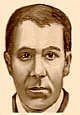
Mark Addy
|
(1838-1890)
Mark Addy was
one of Salford's most legendary sons, famed in his lifetime for
rescuing no fewer than 50 persons from drowning in the River Irwell.
Born at the Parsonage in Blackfriars Street in 1838, as a young
lad he assisted his father in the running of his boat hire company,
so that, though he could not swim, was no stranger to water. His
first rescue was at the age of 13, when he waded in up to his
chin to drag a small boy to safety.
After 33 rescues over a period of 25 years he was awarded the
Albert Medal First Class by Queen Victoria in 1878; he had already
been awarded the Bronze and Silver Medals of the Royal Humane
Society, as well as the Gold Medal of the Royal Humane Society
of the Salford Hundred. As an adult he owned the riverside Boathouse
Inn. Eventually he succumbed to the River Irwell, when, after
his last rescue he suffered a fatal illness brought on by swallowing
the heavily polluted waters and he died on the 9th June 1890.
A pub bearing his name exists today on the Salford Bank of the
River Irwell.
|

Bill Speakman
|
(Born
1927)
Altrincham born Bill Speakman was a tall man of 6 feet 6 inches
who began a military career as a drummer boy in the local Army
Cadet Corps. He later joined the King's Own Scottish Borderers,
and went on to be awarded the Victoria Cross for Gallantry in
1951 during the Korean War. The award was given as a result of
his repeated charges against a heavily defended enemy hill position
without regard for his personal safety, and despite being wounded
and out of ammunition, pelted the enemy positions with tin cans,
stones and beer bottles. Speakman was the first to receive the
VC from Queen Elizabeth II, and was dubbed the "Beer Bottle VC"
by the press.
A shy and retiring man, he returned from the war to Altrincham
to be greeted by throngs of well-wishers and civic dignitaries.
After demobilisation, Speakman grew unhappy with civilian life,
and later after remarrying he went to South Africa in 1972 where
he worked as a Security Officer in Durban.
Bill
became a Chelsea Pensioner on the 1st November 1993 and was among
the Pensioners that marched across the Royal Albert Hall arena
at the Festival of Remembrance ceremony on 13th November 1993.
He became an out pensioner the following year and returned to
South Africa. He returned to take part in the Queen's Golden Jubilee
Parade in London on the 4th of June 2002.
Bill Speakman's Victoria Cross and his other medals reside in
the National War Museum of Scotland, The Castle, Edinburgh, formerly
known as the Scottish United Services Museum.
Further
details are available on the Victoria Cross Awards website at:
http://www.victoriacross.net/default.asp
Our latest information is that he now goes by the name of Bill
Speakman-Pitt.
We
are indebted to Mr Terry Hissey, who is a researcher for the
Victoria Cross Society, for providing material and verifying
the information we have here on Bill Speakman.
|
|

Charles Ewart
|
Ensign
Charles Ewart
(1769-1846)
Charles Ewart
was known as the "Most Illustrious Grey" after he had led the
Scots Greys in a cavalry charge to capture French Eagle and battle
standard at the Battle of Waterloo in 1815. He was born in Kilmarnock
in Scotland and grew to be almost 7 feet tall.. At the time of
Waterloo, aged 46, he was a sergeant in the 2nd Royal North British
Dragoons and an excellent swordsman. As a result of his dashing
bravery he was given the King's Commission and rank of Ensign
by the Prince Regent and awarded the Waterloo Medal. He was married
to Margaret Geddes from Stockport. In 1821, Ewart left the army
with a £100 a year pension and moved with his wife to live in
Salford, where he taught swordsmanship and fencing to supplement
his income. In 1830 the Ewarts moved to live in Davyhulme, where
Charles was to spend the remainder of his life. He died in 1846
at the age of 77 and is buried beside the New Jerusalem Church
in Salford. The church was later demolished and the graves paved
over. In 1936, the Scots Greys had his body removed to Edinburgh
Castle, where it now lies buried.
Back
to Top
|
|

George Peachment
This photographic
image courtesy of Roger Hebblethwaite
|
George
Peachment VC
(1897-1915)
Born in a barber's shop in Manchester Road, Buryon the 5th May
1897, Bill Peachment was one of the youngest soldiers ever to
receive the Victoria Cross in the First World War. In September
1915, at the age of 18, Rifleman Private Peachment No. 11941 was
enlisted in King's Royal Rifle Corps, when they were engaged in
the Battle of Loos. During the offensive at Hulluch on the 25th
September, Peachment saw his commanding officer, Captain Dubs,
lying on the ground wounded a short distance from the German trenches.
Despite heavy fire, Peachment crawled towards the officer and
attempted to dress his wounds when he was hit by shrapnel from
an exploding shell nearby, and suffered a rifle bullet to the
head. Peachment died instantly, though Captain Dubs survived to
recommend him for the Award. Peachment had been one of the youngest
men in his battalion, and gave this splendid example of courage
and self-sacrifice.
Back
to Top
|

William Horace
Taylor
This photographic image courtesy of Roger Hebblewaite |
William
Horace Taylor GC MBE
(1908-1999)
Born on 23rd october 1908, Lieutenant Commander William Horace
Taylor, a former pupil of Manchester Grammar School was one
of several Mancunians who were awarded the George Cross. Taylor
was a bomb disposal engineer and was given the award for work
done in disposal of mines in September and October 1940. He
had worked at Manchester Docks (now Salford Quays) and had joined
the Admiralty at the outbreak of war in 1939. He suffered from
many bomb blasts, but survived them all and spent his post-war
years in the Scouting Association, and became a property manager
in Glasgow. He died on 16th January 1999 at the age of 90. He
had also been awarded the MBE.
Further
information on George Cross awards can be found at the new website
at: http://www.gc-database.co.uk
|
| |
(b?-1942)
Lieutenant John Percy Walton was a member of the Royal Engineers
occupied in bomb disposal work during the Second World War. He
had just graduated from Manchester University at the outbreak
of war and immediately joined the 110th East Lancashire Company
of the Royal Engineers. He was involved in many disposals in France
and on the beaches at Dunkirk. During his short career, he successfully
defused over 100 bombs and other ordinance from 1940 until his
death while defusing a bomb on the 1st April 1942.
|

Joanna Toff |
Joanna
Toff QGM
On
the 22nd of August 1985 a Boeing 737 aeroplane caught fire on
the tarmac at Manchester Airport, killing 55 people. The fire
began when the Corfu bound aircraft's engine blew up while it
was taxiing to the runway. Two of the air hostesses, Jacqueline
Urbanski and Sharon Ford, died tragically while trying to rescue
trapped passengers.
A third, Joanna Toff crawled on her hands and knees down the
smoke filled aisle of the aircraft feeling her way towards other
passengers and helping them escape from the inferno. The three
hostesses were awarded the Queen's Gallantry Medal, two, of
course, posthumously, and Joanna, who was highly praised for
her courage.
In 1988, Sharon Ford (posthumously), Joanna Toff and Jacqueline
Urbanski (posthumously), were the recipients of the Flight Safety
Foundation Heroism Award. The FSF Heroism Award was established
in 1968 to recognise civil aircraft crew members and ground
personnel whose heroic actions exceeded the requirements of
their jobs and, as a result, saved lives or property.
We
are grateful to Terry Hissey for providing additional information
on Joanna Toff, as well as other Military heroes contained on
these web pages.
|
|