NAVIGATION









































Virtual
Hosting by

TheServerBank
Drawings
by John Moss
|
 |
 |
Manchester
Celebrities
Television, Film, Media & Broadcasting
(1)
|
Books, Videos
& DVDs by Mike Harding
|
Mike
Harding

(b.
1944)
A local lad of wit and humour, known as the 'Rochdale Cowboy',
Mike Harding came with a ready line of comic songs accompanied
by the guitar, and he was a popular local radio presenter in the
1970s and 80s, who still makes occasional appearances now and
then. He was actually born in Lower Crumpsall in 1944 into a working
class Irish Catholic family, though his father was killed in the
Second World War, before Mike was born. Did a variety of menial
and manual tasks before getting his degree in English, and embarking
on an early career as a playwright. His first play "Fur
Coat and No Knickers" broke the box office at the Oldham
Coliseum. He has written many successful plays, but he is best
known as a broadcaster and radio raconteur. A keen cyclist and
rambler, he now lives in Dent in Cumbria and works in studio recording
from his converted barn home.
Back
to Top
|
Books, Videos
& DVDs with Caroline Aherne
|
Caroline
Aherne

(b.
1963)
TV Comedienne, creator of television's "Mrs Merton",
and now well known for her part in Paul Whitehouse's
"The Fast Show" and in "The Royle
Family", Caroline Aherne was born on Christmas Eve in
1963 in Wythenshawe, the daughter of an Irish railway worker.
She attended the Hollies Convent Grammar School in West Didsbury
and then went on to the (then) Liverpool Polytechnic as a drama
student. She worked for a time as a secretary at the BBC in Manchester
where she met her co-writers Craig Cash and Henry Normal. Caroline
also has a cult following on the Manchester live comedy circuits,
and worked for a time with Cash on a pirate radio station, where
the character of Mrs Merton was developed. After a few shows,
both Caroline and Cash were sacked, but their show was picked
up by BBC Radio 2, where the character was further developed,
and paved the way for her better known television series later.
Back
to Top
|
Books, Videos
& DVDs with Will Hay
|
Will
Hay

(1889-1949)
Born in 1889, this early film and radio comedic actor developed
his dotty schoolmaster characterisation on the basis of stories
told to him by his sister, a school teacher in Cheetham Hill.
His early years were spent working as an engineering apprentice
in his father's company in Manchester, (though he had been born
in Stockton-on-Tees). In his spare time he learned French and
German, and acted for a time as an interpreter for the Calico
Printer's Association in Manchester. He married his wife, Gladys
Perkins at the age of 19 (she was then 16) at a church in Higher
Broughton. Success in an audition at Manchester's Palace Theatre
gave him a year's paid acting work. Here he met the then famous
Fred Karno's Army troupe e, joining them in such 1930s movies
as "Those Were the Days", "Boys will be Boys",
"Where there's a Will", and in the 1940s "The
Goose Steps Out" and "My Learned Friend".
Hay was actually no mean scholar, either - he actually appeared
on the BBC's "Brain Trust", was a noted astronomer,
as well as a pilot. He died in 1949 aged 60 years.
Back
to Top
|

Warren Clarke
|
Warren
Clarke
(b.
1948)
Actor, often comedic, best known for his role in TV's "Dalziel
& Pascoe", but he has a long list of other appearances
to add to his CV: "The Manageress", "Gone to
the Dogs", "The Locksmith" and "A Respectable
Trade" amongst them, as well as his early appearance
as Dim in the film "A Clockwork Orange".Born in 1948
in Chorlton-cum-Hardy, the son of a stained glass maker, Clarke
joined the Manchester Evening News straight from school,
aged 15, as a copy boy. He soon moved onto amateur dramatics and
performed at Huddersfield Rep and the Liverpool Playhouse, before
becoming more serious and taking up acting as a professional full-time
career. He went on to perform at the Manchester Library Theatre,
Newcastle Playhouse, and began to appear in television soap operas.
In 1969, his career was well underway and he moved to London.
He now lives in Buckinghamshire with his wife and child.
Back
to Top
|
Stuart Hall |
Stuart
Hall
(b.
1929)
Born on the 25th December 1929. His infectious laugh endeared
him to millions in the TV series "It's a Knockout" way
back in the 1980s, and he was very well known as a local news
reader on BBC North at Manchester. He attended Glossop Grammar
School where he achieved high academic accolades, captained the
soccer team and became head boy.
Born in Ashton-under-Lyne, the son of a local baker, Stuart had
intended a career as a racing driver, but he shot to fame as an
affable evening presenter on the local BBC magazine programme,
"North West Tonight". An uncompromising extrovert,
Stuart Hall loves clothes, cars, cooking, and collects antique
clocks.
Back
to Top
|
|
|
Robert
Donat

(1905-1958)
Popular 1930s and 40s Hollywood actor, best known for his role
in "Goodbye Mr Chips" in which he gave the definitive
performance. Born Fitzgerald Robert Donat in March 1905 at 42
Albert Road (later renamed Everett Road) in Withington, Manchester.
He attended the Central Grammar School for Boys and then studied
to go on the stage in Manchester. He appeared subsequently in
many repertory theatres, including Birmingham, Manchester and
Cambridge and London's West End. His big movie opportunity came
with a part in the 1932 version of John Buchan's "The
Thirty-Nine Steps", later in "The Citadel"
and "The Count of Monte Cristo". But he is best
remembered as Mr Chips, whom he modelled on one of his own old
schoolmasters. Ill health and chronic asthma meant that he only
ever appeared in 19 films, and actually needed an oxygen mask
between takes on the filming of "The Inn of the Sixth
Happiness", in 1958, his last film, as he died, at the
age of 53, within days of its completion.
Back
to Top
|
Video &
DVDs of
Bernard Manning
|
Bernard
Manning

(1930-2007)
Another local comedian, very popular on TV in the 1970s, who has
performed solely in his own Embassy Club since the decline in
the popularity of his rather racist and rude act. Born in Ancoats
in 1930 and brought up in Faulkener Street in Blackley, he sang
in the school choir and began as an entertainer with impressions
of George Formby. Joined the Oldham Empire as a singer at £15
a week. He later persuaded his father to help him buy the old
billiard hall on Rochdale Road in Harpurhey, which he opened as
the Embassy Club in 1959. Short of cash he looked for young rising
stars who only commanded low pay rates - Mike Yarwood, Matt Monroe
and Jimmy Tarbuck all began their careers at this venue. Came
to more general notoriety when he appeared on Granada Televisions
"The Comedians" in the 1960s. Bernard recently retired
due to ill health and his son, Bernard junior has taken over at
the club. Bernard Manning is also chairman of Radcliffe Football
Club.
Bernard Manning died at the age of 76 on Monday 18 June 2007 at
North Manchester General Hospital where he was being treated for
a kidney condition.
Back
to Top
|
Books, Video
& DVDs of John Thaw
|
John
Thaw

(1942-2002)
Inspector Reagan in "The Sweeney" in the 1970s,
"Kavanagh QC" in the early 1990s to "Inspector
Morse" in the late 1990s - John Thaw pursued a most celebrated
career as a British television actor.
A one-time potato porter in Manchester's Smithfield Market, Thaw
was at one time the highest paid actor on British television,
earning a reported £50,000 per hour on set.
Born in 1942 in Longsight, the son of a lorry driver, his family
later moved to Burnage, where Thaw had his first acting experience
at a Burnage Community Association party. Having done badly at
school, he succeeded in raising an LEA grant to study at the RADA
stage school, from whence he never looked back.
He
was married to the actress Sheila Hancock. Shortly after his last
television appearance in "Goodnight Mr Tom" he
died, sadly, and much loved, in February 2002 after losing a long
battle with cancer.
His
full official biography is available at the website: http://johnthaw.topcities.com/johnthaw.html
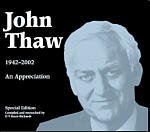
"John Thaw
- an Appreciation"
by Donald Knox-Richards.
Back
to Top
|
Video &
DVDs of
Harry H Corbett
|
Harry
H Corbett

(1925-1982)
Best known as Harold Steptoe in the 1960s and 70s TV series
"Steptoe & Son", Corbett was actually born in
Burma in 1925, but when his mother died he was sent back to England
(aged three) to be brought up by an aunt in Ardwick. Later, inspired
by a favourite teacher at Sharston Senior School, he wrote his
first play before leaving school at age 14. A series of dead-end
jobs ensued, grocer's delivery boy, plumber, male nurse, car sprayer,
until he joined the Chorlton Repertory Company at the age of 23,
and later the Theatre Workshop Company in Manchester working under
Joan Greenwood. He appeared in many comedy films, including the
"Carry On" series, "The Bargee", "Crowns
and Coronets" and "The Magnificent Seven Deadly
Sins". In 1962 he auditioned and got the role in a "one-off"
play called "Steptoe & Son". It was such a success
that the series ran on television for 13 years. He was named Actor
of the Year in 1962. He died of a heart attack in 1982 aged 57.
Back
to Top
|

|
|
Books, VHS &
DVDs of Fred Dibnah
|
Fred
Dibnah MBE

(1938-2004)
Born in Bolton, Fred Dibnah came into public notoriety when a
local BBC Television broadcast had included a news item showing
him gilding and installing the topmost finial of Bolton Town Hall.
His earthy cloth-capped common-sense attitudes, personable 'old
world' philosophy, love of all things mechanical (and particularly
steam engines), and his unashamedly workingman charm, immediately
endeared him to millions of viewers, and he became an overnight
national celebrity.
Actually, by training and trade, Fred was a joiner, but he is
now probably best known for felling chimney stacks. His new-found
celebrity status was confirmed in 1979 when he was invited to
take part in the making of an hour long television film series
about people with unusual occupations. The film won two awards
and was entitled was called "Fred Dibnah - Steeplejack".
Several other TV series have followed, covering various topics,
including his work as a steeplejack, the restoration of his steamroller
and various industrial archaeology programmes. Another less celebrated
series covered Fred's divorce and the effects of being a television
personality. In 1994 the BBC released a book called "The Fred
Dibnah Story". Other independent videos have been subsequently
released, on topics close to his heart, including "The Ups and
Downs of Chimneys" and "All Steamed Up" illustrating his devotion
to his many steam restoration projects. As a result of his considerable
experience and expertise in steam restoration, which is really
his first love, he was asked to undertake a major restoration
project at Glynllifon Parc, Caernarfon, where the restored steam
engine and boiler won a heritage award.
In 1996, Fred divorced his second wife Sue, mother to sons Jack
and Roger. In 1998 he married Sheila Grundy from Blackpool.
Recent projects include filming a new series of six programmes
with a working title called "Fred Dibnah's Industrial Tour
of Britain" and an accompanying book and set of videos are
planned.
Fred still demolishes chimneys, and these events always attract
large crowds and media attention, as well as maintaining a regular
broadcasting career on industrial heritage topics for satellite
television..
In
the Queen's new Year's Honours List in 2004 he was awarded the
MBE for his services to our industrial heritage.
In recent years he had been suffering from cancer and cancelled
all engagements in September 2004 after he was taken ill during
filming his last television series, "Made In Britain".
Fred Dibnah lost his fight with prostate cancer only weeks after
filming this final television series, and died peacefully at 12
noon at Bolton Hospice on Saturday 6th November 2004 aged 66.
He was surrounded by friends and members of his family. Fred's
final wish was that his beloved traction engine "Betsy"
should carry his coffin, as he said he would like this.
His final 12 part television series was broadcast in 2005.
See
also: Fred Dibnah's Memorial Statue,
Bolton
Back
to Top
|
More
Media Celebrities follow >...
|